I still remember the first time I tried to impress a date with scallops. The smoke alarm sang backup, the scallops turned into rubbery hockey pucks, and the sauce tasted like battery acid. Fast-forward through a decade of obsessive testing, a few mortifying dinner parties, and one triumphant evening when a Michelin-trained chef asked for my recipe—this is the fool-proof, flavor-bomb version that finally made me the scallop hero of my friends group. Picture this: golden, crusty scallops that crackle like thin ice under your fork, their sweet flesh still custard-tender inside, lounging on a glossy sauce that marries the bright perfume of Meyer lemon with the jeweled pop of pomegranate. The whole thing comes together faster than you can binge an episode of your favorite show, yet it plates like restaurant art. If you’ve ever forked over thirty bucks for seven stingy scallops at a bistro, only to leave hungry and underwhelmed, I dare you to taste this and not go back for seconds—maybe thirds. I’ll be honest: I ate half the batch before anyone else got to try it, standing over the stove in my socks, swearing I was “just checking seasoning.” The contrast of warm, buttery seafood against the cool burst of tart arils is pure sensory fireworks, and the Meyer lemon’s honeyed acidity keeps the richness in check so you can actually taste the ocean in every bite. Stay with me here—this is worth it, and by the end you’ll wonder how you ever made it any other way.
Most recipes get this completely wrong. They tell you to “pat dry” with one limp paper towel, crowd the pan like a subway at rush hour, and then wonder why you end up with pale, weeping scallops that smell like low-tide. Here’s what actually works: a screaming-hot skillet seasoned until it whispers smoke, scallops so dry they could file taxes, and a timing system that treats every side like a precious commodity. The pomegranate molasses glaze is the game-changer—thick, tangy, slightly bitter, it lacquers the citrus segments and turns the pan juices into a sauce you’ll want to lap up with a spoon. Okay, ready for the game-changer? We’re going to baste the scallops with brown butter infused with crushed coriander seeds. That nutty, floral waterfall spooned over the tops creates a crust so addictive my neighbor tried to bribe me with home-brewed kombucha for the secret.
And now the fun part: plating. Imagine pulling these beauties out of the oven (yes, a quick oven kiss guarantees even centers), the whole kitchen smelling like seaside caramel, pomegranate seeds rolling across the cutting board like ruby marbles. You’ll drag a spoonful of that glossy sauce across the plate, perch the scallops on top, finish with a snowfall of lemon zest, and watch everyone’s eyes widen before they’ve even tasted a bite. Even my “I don’t do seafood” brother-in-law asked for the recipe—then asked if he could triple it for his Super-Bowl party. Future pacing? Picture yourself casually dropping this dish on the table next date night, candlelight flickering off those jeweled seeds, your reputation as a kitchen rockstar cemented forever. Let me walk you through every single step—by the end, you’ll wonder how you ever made it any other way.
What Makes This Version Stand Out
Crust Factor: We dry-brine the scallops for ten quick minutes with a whisper of salt and baking soda. That draws out surface moisture and raises the pH, triggering the Maillard reaction faster than you can say “golden.” Translation: a crust so crisp it shatters like crème brûlée armor.
Flavor Bomb Glaze: While other recipes flog a tired butter-lemon sauce, we reduce pomegranate juice with a ribbon of honey and a crack of black pepper until it becomes a glossy lacquer. The sweet-tart syrup clings to each scallop and mingles with the citrus, giving you that high-end restaurant sheen without the markup.
Coriander Brown Butter: Toasted, cracked coriander seeds swim in foaming butter until they smell like walking past a bakery in Morocco. Spooned over the scallops in the final 30 seconds, they leave freckles of citrusy, nutty perfume that make tasters close their eyes involuntarily.
One-Pan Elegance: Sear, baste, glaze, and finish in the same skillet. Fewer dishes, more swagger. If you’ve ever scrubbed molten sugar off three pots at midnight, you know this is the real victory.
Make-Ahead Friendly: The pomegranate molasses keeps for weeks in the fridge, and you can pre-section the Meyer lemon supremes up to 24 hours ahead. When guests arrive, you’re ten minutes from plate-to-face satisfaction.
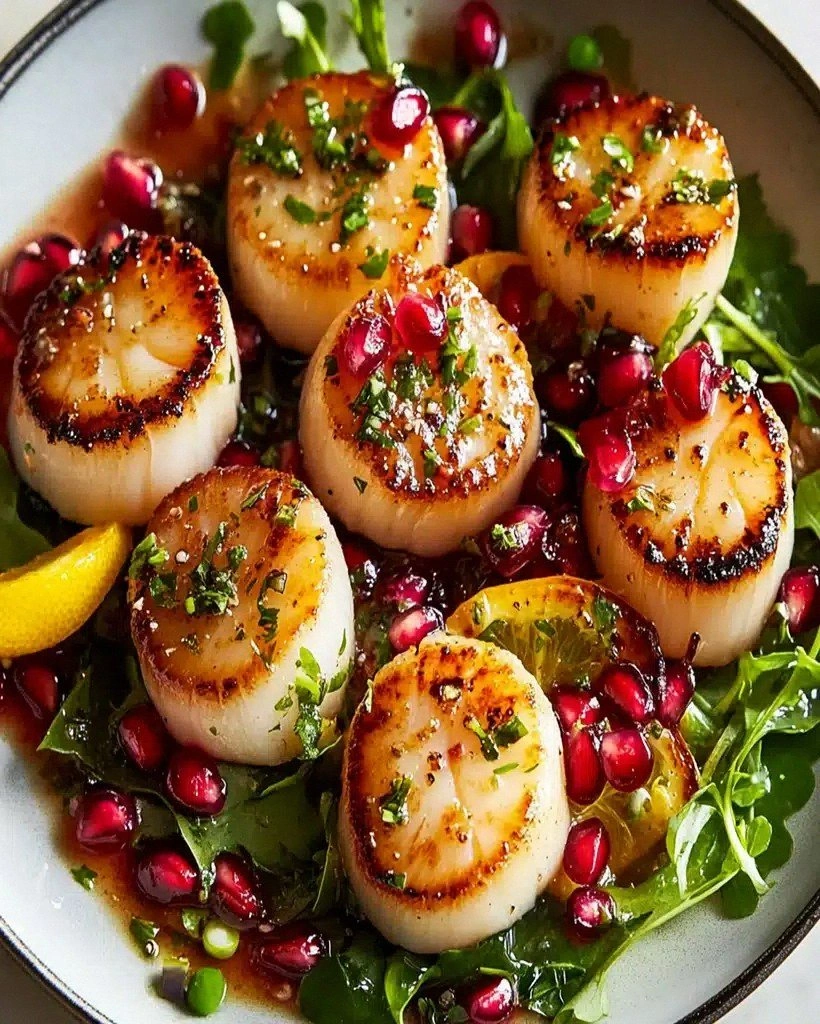
Visual Drama: Ruby arils against ivory scallops with flecks of green parsley look like edible jewelry. Instagram gold, yes—but also the kind of beauty that silences a table for a respectful second before the forks start clinking.
Inside the Ingredient List
The Flavor Base
Start with dry-packed, never “wet,” sea scallops. Wet scallops soak in a phosphate solution that makes them balloon with water, so they steam instead of sear and taste vaguely of soap. Dry scallops feel sticky, smell like an ocean breeze, and caramelize like champions. If you can only find wet ones, soak them for 15 minutes in a brine of 1 quart water + ¼ cup lemon juice + 2 Tbsp salt; it strips the chemicals and saves dinner.
Meyer lemons are the golden children of the citrus world—less acidic, more floral than Eureka lemons. Their thin, edible peel smells like a lemon blossom making out with an orange. Zest half the fruit for the sauce, supreme the rest into sunny segments that burst juice when you bite through a scallop. Regular lemons work in a pinch, but add a teaspoon of honey to mimic that mellow sweetness.
The Texture Crew
Ghee (or clarified butter) is your high-smoke friend for the initial sear. Whole butter burns at 350 °F; ghee cruises past 450 °F, giving you time to build a crust without black specks of acrid despair. Keep a knob of regular butter for the basting phase when you lower the heat and want those milk solids to brown, not burn.
Pomegranate seeds bring caviar-like pops. Buy the fruit whole, score it like an orange, and submerge it in a bowl of water while you tease the arils out—no crimson crime scene on your shirt. Frozen arils are fine; thaw them five minutes on paper towels so they don’t bleed into the sauce.
The Unexpected Star
Coriander seeds might sound like an odd beach buddy for scallops, but toast them lightly and they release lemon-pepper notes that make the shellfish taste more like itself. Crush them with the bottom of a heavy pan until some are dust and some are chunky confetti; that variation means every bite is a slightly different song.
The Final Flourish
Flat-leaf parsley adds a grassy snap to cut through brown-butter richness. Chiffonade it at the last second; pre-cut parsley oxidizes into a sad army-green fleck within an hour. If you’re feeling fancy, swap in fennel fronds for an anise whisper, or tarragon for licorice luxury.
Everything’s prepped? Good. Let’s get into the real action...
The Method — Step by Step
- Pat the scallops bone-dry with paper towels, then park them on a wire rack in the fridge, uncovered, for 10 minutes while you prep everything else. This mini desiccation chamber pulls surface moisture so they’ll skate across the pan instead of sticking like clingy toddlers. Season only the top side with a 50/50 mix of kosher salt and a pinch of baking soda; the alkaline boost accelerates browning. Ignore any recipes that tell you to salt both sides now—salt draws water, and water is the enemy of crust.
- Place a heavy stainless or cast-ron skillet on medium-high heat for 2 full minutes. When you see the faintest wisp of smoke, add just enough ghee to coat the bottom like a shimmering sheet of cellophane—about 1½ teaspoons. Tilt the pan; if the fat races to the edges like mercury, you’re ready. Listen for that sizzle when the first scallop kisses the metal; it should sound like applause starting in a quiet theater.
- Lay the scallops in clockwise order starting at 12 o’clock, presentation side down, leaving 1 inch between each. Do not move them for 90 seconds. Seriously, hands off. Peek at one edge: if it’s mahogany and the sides have turned opaque halfway up, you’re on the yellow brick road to crust city. If they stick, they’re not ready; patience, young padawan.
- Flip with thin fish spatulas, then drop heat to medium. Add 1 tablespoon unsalted butter, 2 crushed coriander seeds, and a smashed garlic clove. Tilt the pan toward you so butter pools at the bottom like a golden lake. Spoon that foaming butter over the tops for 30 seconds; the milk solids will toast and the coriander will bloom, releasing lemon-pepper clouds that make you involuntarily hum.
- Transfer the skillet to a 400 °F oven for 3 minutes (2 if your scallops are U-10 size). This gentle ambient heat cooks the centers without turning the bottoms into shoe leather. Meanwhile, pour ½ cup pomegranate juice into a tiny saucepan with 1 tablespoon honey and a crack of black pepper. Simmer hard for 4 minutes until syrupy and reduced by half; it should coat a spoon like melted cherry cough drop.
- Pull the skillet from the oven, transfer scallops to a warm plate, and tent loosely with foil. Return the pan to medium heat, add the Meyer lemon zest and juice, scrape up the fond with a wooden spoon, then whisk in the pomegranate molasses. The sauce will seize for a heartbeat, then relax into a glossy lava you could pour over literally anything—including your finger when no one’s looking.
- Add the pre-sectioned Meyer lemon supremes to the sauce for 15 seconds—just enough to warm through without collapsing the segments. Their membranes will drink in a ribbon of color and they’ll glisten like edible stained glass.
- Plate on warm dishes (cold plates murder hot food). Spoon a crescent of sauce, nestle 3 scallops on top, scatter pomegranate arils like reckless confetti, finish with parsley and a final whisper of flaky salt. Serve immediately; these wait for no one.
That's it—you did it. But hold on, I've got a few more tricks that'll take this to another level...
Insider Tricks for Flawless Results
The Temperature Rule Nobody Follows
Scallops need to hit the pan at 50 °F—cool enough to keep their centers from overcooking, warm enough to avoid thermal shock. Pull them from the fridge 5 minutes before searing, no more. A friend tried skipping this step once; let’s just say the outsides resembled jerky while the insides stayed sushi. If you’re paranoid, use an instant-read thermometer: when the center reaches 115 °F, they’re perfect; carry-over heat will coast them to 120–125 °F while they rest.
Why Your Nose Knows Best
Don’t trust timers; trust aroma. When the butter stops smelling like popcorn and starts smelling like hazelnuts, you have 15 seconds before it burns. Count them out loud like a launch sequence, then yank the pan off the burner. That nutty perfume is your cue that the milk solids have caramelized and the coriander has surrendered its oils.
The 5-Minute Rest That Changes Everything
Rest seared proteins? With scallops it sounds criminal, but a 2-minute tented rest on a rack lets the juices redistribute so they don’t flood the plate when you cut into them. They’ll stay hotter anyway because you’re not losing all the steam at once. Try it once; you’ll never serve leaky scallops again.
Creative Twists and Variations
This recipe is a playground. Here are some of my favorite ways to switch things up:
Blood Orange & Basil Riff
Swap Meyer lemons for blood oranges; their raspberry-like acidity plays beautifully with the pomegranate. Replace coriander with crushed pink peppercorns for a floral heat, and finish with chiffonaded Thai basil instead of parsley. The color palette turns into a sunset—perfect for February when citrus is king and you want to feel like you’re vacationing in Sicily.
Smoky Chorizo Crumble
Render diced Spanish chorizo in the skillet before the ghee goes in. The paprika-red oil perfumes the scallops, and the crispy nibs become salty treasure buried in the sauce. A friend tried this and texted me at 1 a.m.: “I licked the plate. My dog is judging me.”
Coconut-Lime Vacation Mode
Sub ghee with coconut oil, finish the sauce with a splash of canned coconut milk and a grate of lime zest. Top with toasted coconut flakes and mint. Suddenly you’re barefoot on a beach, even if it’s sleeting outside.
Spicy Gochujang Glaze
Whisk ½ teaspoon gochujang into the pomegranate molasses for a Korean kick. Finish with sesame seeds and scallion threads. The sweet-fermented heat makes beer taste better—trust me, I tested this extensively.
Truffle & Cauli Purée Comfort
Spoon a swoosh of warm cauliflower purée on the plate, nestle scallops on top, then drizzle the pomegranate sauce like modern art. A drop of white truffle oil at the end adds woodsy decadence; perfect for when you want to feel like you’re dining in a chalet without shoveling snow.
Storing and Bringing It Back to Life
Fridge Storage
Cooked scallops will keep 2 days in an airtight container lined with paper towel to wick moisture. Keep the sauce and garnishes separate; arils weep purple tears that stain everything. Reheat in a covered skillet with a splash of stock over medium-low for 2 minutes—just until warmed through. Microwaves turn them into rubber bands; avoid at all costs.
Freezer Friendly
Freeze uncooked, dry scallops (not the finished dish) on a parchment-lined sheet until solid, then vacuum-seal or zip in freezer bags with the air sucked out. They’ll keep 2 months. Thaw overnight in the fridge on paper towels, then proceed with the recipe. Do not refreeze; texture goes from silk to sandpaper.
Best Reheating Method
Add a tiny splash of water to the skillet before reheating; it steams back to perfection without toughening the protein. Cover for 1 minute, then uncover to let any excess moisture evaporate. Finish with a quick kiss of fresh butter to restore gloss. They won’t be quite as transcendent as day-one, but they’ll still beat most restaurant versions.