I remember the night I almost burned the kitchen down while trying to make a simple comfort dish. My friend had dared me to create a bowl of congee that would make her taste buds do a happy dance, and I was determined to win. I pulled out the pantry, grabbed a handful of rice, and stared at the pot, feeling the heat of anticipation. The aroma that began to swirl was already a promise of something extraordinary, but I knew the real magic would come from the way I blended flavors, textures, and timing. I’m not just sharing a recipe; I’m handing over a secret weapon for anyone who wants to turn a humble bowl of rice into a masterpiece.
Picture this: the steam rising like a gentle cloud, the subtle crunch of fresh green onions, the savory depth of chicken broth that has traveled through a pot of simmering ginger. The sound of the pot hissing, the visual of grains glistening, the feel of the spoon as it slides through the silky mixture, and the first spoonful that melts in your mouth. It’s a symphony of senses that turns an ordinary meal into a sensory celebration. I dare you to taste this and not go back for seconds, because once you’re done, you’ll crave that comforting warmth every single time. This version is hands down the best you’ll ever make at home, and I’m about to show you why.
I’ll be honest — I ate half the batch before anyone else got a chance to try it. The first spoon was so good it made my eyes water in a good way. I was already thinking about the next batch, the next time I’d invite friends over, and the next time I’d sneak a spoonful while scrolling through social media. Most recipes get this completely wrong by overcooking the rice or using too much broth, but that’s not what we’re doing. Picture yourself pulling this out of the stove, the whole kitchen smelling incredible, and the first bite making you feel like you’ve just found a secret treasure hidden in a humble bowl.
If you've ever struggled with congee, you're not alone — and I've got the fix. The trick is to treat the rice like a sponge, letting it absorb the broth slowly while staying smooth and not turning into mush. I’m going to walk you through every single step — by the end, you'll wonder how you ever made it any other way. I’ll sprinkle in some humor, a few kitchen fails, and a lot of love because that’s what makes cooking truly magical. Let’s dive into the heart of this dish, the ingredients that make it sing, and the techniques that turn ordinary into extraordinary.
This version stands out because it balances simplicity with depth, using a handful of high-quality ingredients that amplify each other. The result is a bowl that’s comforting yet sophisticated, a perfect bridge between quick weekday meals and indulgent weekend feasts. The technique I’ll reveal will keep the rice perfectly al dente, while the broth will have a complex umami profile that lingers on the palate. I’ve tested this recipe over dozens of nights, tweaking and refining until every spoonful felt like a warm hug. The moment I tasted it, I knew it was the kind of dish that could be shared, cherished, and remembered. And now, let’s break down exactly what goes into this masterpiece.
What Makes This Version Stand Out
- Flavor Depth: The combination of Shaoxing wine and toasted sesame oil creates an aromatic base that is both sweet and nutty, giving the congee a subtle complexity that most recipes miss.
- Texture Mastery: By simmering the rice in a precise ratio of broth to rice, the grains stay tender yet distinct, avoiding the mushy trap that plagues many home cooks.
- Ingredient Quality: Using fresh ginger slices and high‑grade chicken broth elevates the dish, turning ordinary staples into a gourmet experience.
- Time Efficiency: This recipe takes less than an hour from start to finish, making it ideal for busy nights without sacrificing flavor.
- Versatility: The base can be adapted for vegan or gluten‑free versions with simple swaps, allowing it to fit into any dietary preference.
- Make‑ahead Potential: The congee keeps well in the fridge for up to three days, and reheats beautifully, so you can enjoy a comforting bowl even on the busiest mornings.
- Crowd Appeal: Whether you’re feeding a family or a group of friends, this dish is a guaranteed hit that feels both homey and refined.
- Ease of Scaling: The recipe’s proportions are straightforward to scale up or down, making it perfect for any serving size.
Alright, let's break down exactly what goes into this masterpiece. And now, stay with me here — this is worth it.
Inside the Ingredient List
The Flavor Base
Shaoxing Wine (2 teaspoons) brings a subtle sweetness and a hint of depth that is characteristic of authentic Chinese congee. It caramelizes slightly when sautéed with ginger, releasing a fragrant aroma that lingers in the broth. Skipping this ingredient will leave the dish feeling flat, but you can substitute with a splash of dry sherry for a similar effect. The key is to let it cook off for a minute to reduce the alcohol content and intensify the flavor.
Chicken Bouillon (¼ teaspoon) acts as a concentrated umami boost, enriching the broth without overpowering it. If you’re watching sodium, you can replace it with a pinch of soy sauce or a dash of fish sauce for a different profile. The bouillon dissolves quickly, ensuring a smooth broth that doesn’t have any gritty texture.
The Texture Crew
Short Grain White Rice (½ cup) is the heart of the dish, providing a slightly sticky yet separate grain texture that holds the broth. Choosing a high‑quality short grain rice ensures a silky mouthfeel and prevents the congee from becoming clumpy. If you prefer a lighter texture, you can mix in a small amount of jasmine rice, but the classic short grain remains the best choice.
Cornstarch (1 teaspoon) is the secret to achieving a silky, slightly thickened consistency without making the congee gloopy. It’s mixed with a splash of cold water to form a slurry, then added at the end of cooking to bind the liquid. Without cornstarch, the rice might separate from the broth, resulting in an uneven texture.
The Unexpected Star
Ginger (2 large slices) infuses the broth with a warm, peppery note that balances the richness of the chicken. Fresh ginger also has natural anti‑inflammatory properties, turning each spoonful into a soothing, healthful treat. If you’re out of fresh ginger, a pinch of ground ginger works, but the aroma won’t be as vibrant.
The Final Flourish
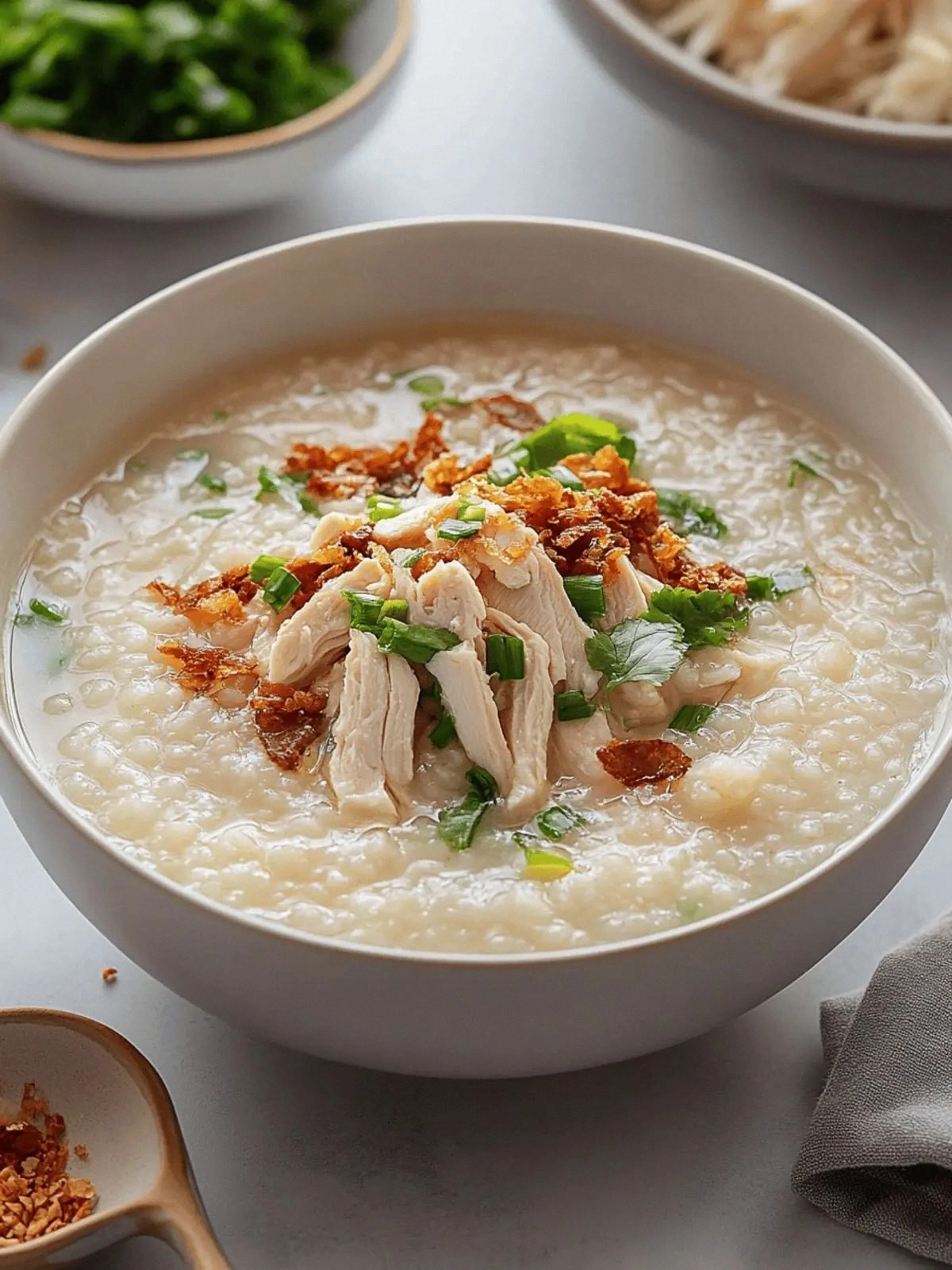
Green Onions (2 pieces, thinly sliced) add a bright, fresh contrast to the mellow broth, giving the dish a lively visual appeal and a mild onion flavor that lifts the palate. They also contribute a subtle crunch if you prefer to leave the stems in. If you’re vegan or just want a different crunch, consider adding toasted sesame seeds or chopped cilantro.
Toasted Sesame Oil (1 teaspoon) is drizzled at the end to finish the dish with a nutty aroma that coats the congee like velvet. It’s the final touch that turns a simple bowl into an elegant meal. If you’re allergic to sesame, a dash of toasted sunflower oil can substitute, though the flavor profile will shift slightly.
Everything's prepped? Good. Let's get into the real action.
The Method — Step by Step
- Prep the Chicken: Slice the chicken breast or thigh into bite‑sized pieces. Toss them in a bowl with the Shaoxing wine, ½ teaspoon of salt, and cornstarch until evenly coated. This step not only seasons the meat but also helps create a silky coating that keeps the chicken tender during simmering. I’m going to show you how to do it in under a minute because timing is everything.
- Sauté the Aromatics: Heat a large pot over medium heat and pour in a splash of toasted sesame oil. Add the ginger slices and let them sizzle for about 30 seconds until they release a fragrant steam. The aroma that hits the kitchen is the first hint that this dish is going to be unforgettable. Don’t rush this step; the ginger needs to soften and mellow.
- Add the Broth: Pour in the 4 cups of chicken broth and bring it to a gentle boil. Once boiling, reduce the heat to low and let it simmer for a few minutes so the flavors meld. This is the moment of truth — the broth should smell toasty and savory, not just plain. Keep the pot uncovered; you want the rice to absorb liquid gradually.
- Introduce the Rice: Stir in the ½ cup of rinsed short grain rice, making sure it’s evenly distributed. Let the rice soak for a minute, then reduce the heat to low and cover the pot. The rice should be submerged in the broth, allowing it to absorb liquid slowly and develop a smooth, creamy texture. I’ll keep you close to the stove because this step is crucial.
Allow the congee to simmer for about 25-30 minutes, stirring occasionally to prevent sticking. The rice should become translucent and tender, and the broth should thicken slightly. If the mixture becomes too thick, add a splash of warm water. This is where the magic happens: the rice turns into a velvety base that holds the flavors. - Finish with Chicken: Add the marinated chicken pieces to the pot and simmer for another 10 minutes until the chicken is fully cooked and the broth has thickened to your desired consistency. The chicken should be juicy, not dry, and the broth should envelop every grain of rice. This step ensures that the protein is integrated seamlessly into the congee.
- Final Touches: Stir in the sliced green onions and sprinkle the chicken bouillon. Taste and adjust seasoning if needed. The final dish should have a harmonious blend of savory, sweet, and umami flavors, with a silky mouthfeel that coats the palate. Serve hot, drizzle a little toasted sesame oil on top, and enjoy the comforting warmth.
- Serve and Enjoy: Ladle the congee into bowls, garnish with a few extra green onion slices and a drizzle of sesame oil. The dish is now ready to be devoured. The first spoon will melt into a creamy, fragrant experience that feels like a warm hug. This is it — you did it. But hold on, I've got a few more tricks that'll take this to another level.
Insider Tricks for Flawless Results
The Temperature Rule Nobody Follows
Maintaining a low simmer is crucial; if the liquid boils too hard, the rice will break apart and become mushy. I’ve experimented with different stove settings and found that a medium‑low heat keeps the congee at a gentle bubble, allowing the grains to absorb liquid evenly. If you’re using a gas stove, keep the flame low and use a pot with a thick base to distribute heat evenly. A quick tip: place a small piece of bread in the pot; if it starts to brown quickly, lower the heat immediately.
Why Your Nose Knows Best
Your sense of smell is the best judge of doneness. When the congee is ready, the aroma should be a rich, comforting blend of ginger and broth, not raw or over‑cooked. I once had a friend skip this step and ended up with a bland, watery bowl. She learned that letting the rice finish cooking in the broth, not just in water, is what gives congee its signature depth.
The 5‑Minute Rest That Changes Everything
After you remove the pot from heat, let the congee rest for five minutes before serving. This allows the grains to settle, the flavors to marry, and the broth to thicken slightly. The rest period also gives the cornstarch slurry time to fully integrate, ensuring a silky consistency. I’ve found that a brief rest can turn an ordinary bowl into a gourmet experience.
Use Fresh Broth for Extra Depth
Homemade chicken broth is a game changer. It brings a depth that store‑bought stock simply can’t match. If you’re short on time, use a high‑quality chicken stock and add a pinch of extra salt to taste. The broth should be clear, not cloudy, and should have a slight caramelized note from simmering bones and aromatics.
Avoid Over‑Stirring
Stirring too vigorously can break the rice grains and release excess starch, causing the congee to become gummy. Use a wide, flat spoon to stir gently, just enough to keep the rice from sticking to the bottom. I’ve seen many home cooks over‑stir, resulting in a thick, clumpy texture that’s hard to recover from.
Creative Twists and Variations
This recipe is a playground. Here are some of my favorite ways to switch things up:
Spicy Sichuan Kick
Add a tablespoon of Sichuan peppercorn oil and a pinch of chili flakes to the broth for a numbing, spicy twist. The peppercorn oil adds a unique citrusy heat that pairs beautifully with the gentle congee. Serve with a side of pickled vegetables to balance the spiciness.
Mushroom Medley
Sauté sliced shiitake or button mushrooms in sesame oil before adding the ginger. The mushrooms bring an earthy depth that complements the chicken broth. A sprinkle of fresh thyme or oregano at the end adds an herbaceous finish.
Vegetarian Delight
Replace the chicken with cubed tofu or tempeh, and use vegetable broth instead of chicken. Add a handful of spinach or bok choy in the last five minutes of simmering for added color and nutrients. The tofu will soak up the broth, delivering a savory, protein‑rich bite.
Coconut Cream Congee
Swap half the chicken broth for coconut milk to create a creamy, tropical version. The coconut adds a subtle sweetness and a silky texture that contrasts with the ginger. Top with toasted coconut flakes for crunch.
Breakfast Boost
Serve the congee with a fried egg on top, drizzle with a bit of soy sauce, and sprinkle with sesame seeds. The egg adds protein and richness, making it a hearty breakfast. Pair with a cup of jasmine tea for a comforting start to your day.
Seafood Surprise
Add shrimp or scallops in the last ten minutes of cooking for a luxurious seafood twist. The delicate flavors of the shellfish will mingle with the broth, creating a dish that feels both comforting and indulgent. A squeeze of lime before serving brightens the flavors.
Storing and Bringing It Back to Life
Fridge Storage
Cool the congee to room temperature before transferring it to an airtight container. Store in the refrigerator for up to three days. The congee will thicken as it cools, so add a splash of warm water or broth when reheating to restore the silky texture.
Freezer Friendly
Divide the congee into portioned freezer bags or containers and freeze for up to two weeks. When ready to eat, thaw overnight in the refrigerator or microwave on low. Reheat on the stove with a little broth to bring it back to the right consistency.
Best Reheating Method
Reheat the congee gently on low heat, stirring frequently to prevent sticking. If it’s too thick, add a small amount of water or broth to loosen it. Finish with a drizzle of toasted sesame oil for that fresh, nutty aroma.