Love this? Pin it for later! 📌
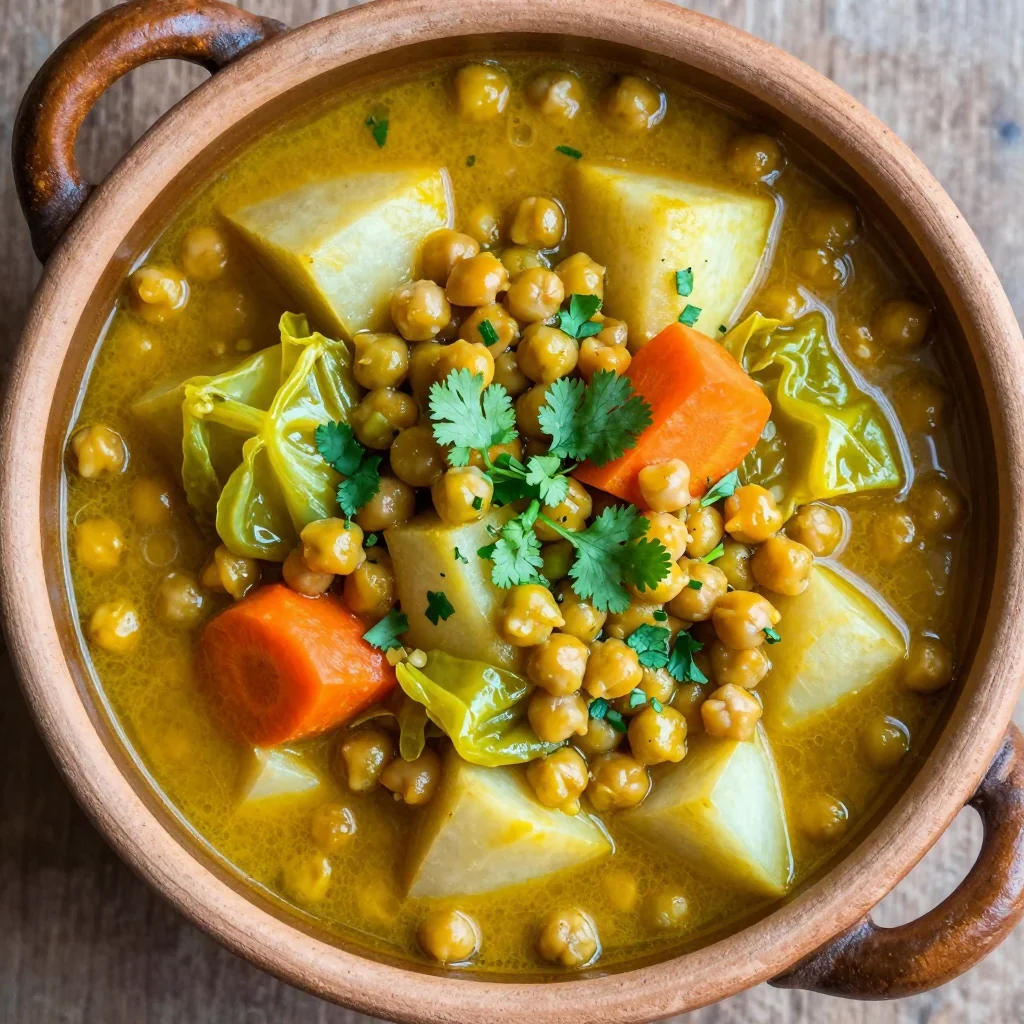
Last January, after the holidays had left my kitchen in a glittery disarray and the farmers’ market was a sea of root vegetables, I found myself craving something that could hug me from the inside out. I wanted a dish that would use up the knobby carrots and parsnips rolling around in my crisper, the half-head of cabbage that had survived three soup nights, and the ever-present cans of chickpeas that line my pantry like loyal soldiers. One pot, minimal cleanup, maximum comfort. What emerged was this One-Pot Chickpea & Cabbage Curry with Winter Root Vegetables—a recipe that has since become the culinary equivalent of a wool sweater on a snow day. It’s weeknight-easy, meal-prep friendly, and somehow tastes even better the next day when the spices have had a chance to mingle. Whether you’re feeding a table of hungry skiers or simply feeding yourself something nourishing after a long workday, this curry is the answer.
Why This Recipe Works
- One-Pot Wonder: Everything—from sautéing aromatics to simmering the vegetables—happens in a single Dutch oven, translating to less dishes and more couch time.
- Pantry Heroes: Canned chickpeas, coconut milk, and basic spices you probably already own create restaurant-level depth without a special grocery run.
- Winter Vegetable Flexibility: Swap in whatever roots you have—rutabaga, turnips, sweet potato—without throwing off cook times.
- Vegan & Gluten-Free: Naturally plant-based and celiac-friendly, so everyone at the table can dive in worry-free.
- Meal-Prep Magic: Flavors bloom overnight, making it perfect for Sunday cook-ups and desk-lunch envy all week.
- Budget-Smart: Feeds six for under ten dollars, proving that healthy eating doesn’t have to break the bank.
Ingredients You’ll Need
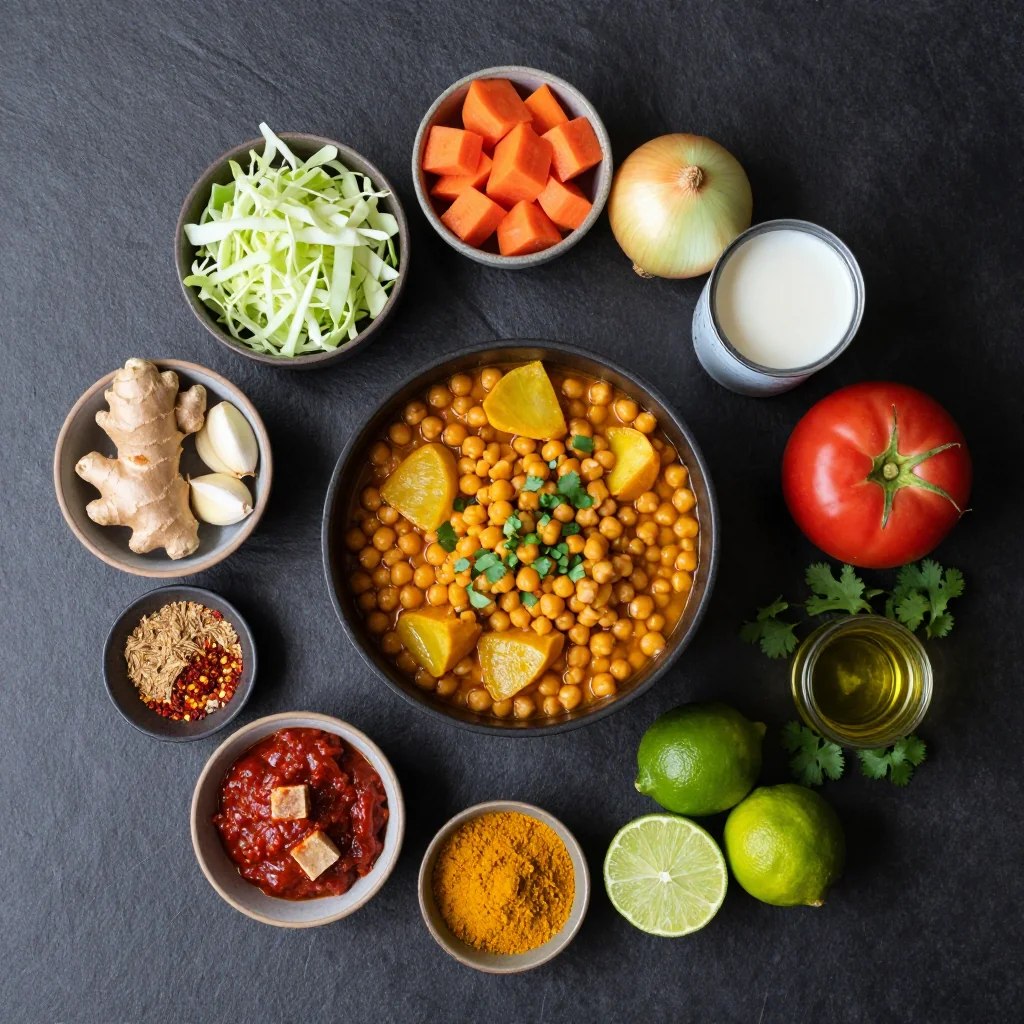
Chickpeas provide protein and a creamy bite that holds up against long simmering. Look for cans with no added salt so you control the seasoning. If you’re a batch-cook boss, 1½ cups of home-cooked chickpeas work beautifully; just stir them in gently so they stay intact.
Cabbage—preferably savoy for its crinkly tenderness—melts into silky ribbons that absorb every drop of spiced coconut broth. When shopping, choose heads that feel heavy for their size with tightly packed leaves; outer spots can be trimmed, so a few blemishes are fine.
Winter root vegetables are the co-stars. I go for a colorful trio of carrot, parsnip, and golden beet for natural sweetness and varied texture. Cut them into ½-inch cubes so they soften in sync with the chickpeas. If your CSA box includes celariac or purple-top turnips, toss them in—just keep the total weight around 1 lb.
Coconut milk lends luxurious body. Use full-fat for the silkiest mouthfeel; light versions will taste thin. Shake the can vigorously before opening or give it a 20-second whisk to re-emulsify.
Spice lineup is warm yet bright: coriander, cumin, smoked paprika, turmeric, and a pinch of cayenne. Toasting them in oil for 30 seconds (a step called blooming) intensifies flavor exponentially. If your spices have been sitting on the rack since last winter, treat yourself to fresh jars—your taste buds will notice.
Finishing touches matter: a squeeze of lime wakes everything up, cilantro adds grassy freshness, and a drizzle of coconut cream (the thick top from a second can) makes presentation café worthy. If you’re averse to cilantro, swap in parsley or thinly sliced mint.
How to Make One-Pot Chickpea & Cabbage Curry with Winter Root Vegetables
Warm the Pot
Place a heavy 5-quart Dutch oven over medium heat for 1 minute. Add 2 tablespoons coconut oil (or any neutral oil) and swirl to coat. A properly preheated pot prevents sticking and jump-starts caramelization.
Sauté Aromatics
Stir in 1 diced large onion plus ½ teaspoon kosher salt. Cook 4 minutes until edges turn translucent. Add 3 minced garlic cloves and 1 tablespoon grated fresh ginger; cook 1 minute more. The salt draws moisture, preventing garlic from scorching.
Bloom the Spices
Sprinkle 1 teaspoon coriander, 1 teaspoon cumin, ½ teaspoon smoked paprika, ½ teaspoon turmeric, and ¼ teaspoon cayenne. Stir constantly 30–45 seconds until fragrant; you’ll see the spices darken slightly and clump with the oil—this is flavor gold.
Add Roots & Tomato Paste
Toss in your 1 lb mixed root vegetables and 2 tablespoons tomato paste. Stir until veggies blush orange and the paste darkens—about 3 minutes. Tomato paste adds umami and a subtle tang that balances coconut richness.
Deglaze
Pour in ½ cup vegetable broth and scrape the pot’s bottom with a wooden spoon to release any browned bits—those carry concentrated flavor. Let it bubble for 1 minute until mostly evaporated.
Simmer with Liquids
Add 1 can full-fat coconut milk, 1½ cups vegetable broth, 2 drained cans chickpeas, and 2 cups shredded cabbage. Bring to a gentle boil, then reduce to low, cover partially, and simmer 18 minutes, stirring once halfway.
Check Doneness
Pierce a carrot cube—it should slide off a fork with gentle pressure. If it’s still firm, simmer 3–4 minutes more. Taste broth; add salt and pepper as needed. Depending on your broth, ½–1 teaspoon additional salt is typical.
Finish & Serve
Stir in 1 tablespoon lime juice, ½ teaspoon garam masala, and a pinch of sugar to round edges. Ladle over rice or quinoa, top with cilantro, and drizzle coconut cream. Serve hot with lime wedges on the side.
Expert Tips
Low-Sodium Hack
Rinse chickpeas in a colander for 20 seconds; it removes up to 40 % of the sodium listed on the can without sacrificing texture.
Spice Thermometer
If serving kids or spice-shy guests, hold the cayenne and add a dash of smoked paprika instead—it gives color without heat.
Texture Boost
Reserve ¼ cup chickpeas, pan-fry in a little oil until crispy, and sprinkle on top for contrast just before serving.
Make It Richer
Whisk 1 teaspoon cornstarch into the coconut milk before adding; it thickens the broth to a velvety gravy that clings to every bite.
No Coconut? No Problem
Sub ¾ cup cashew cream (blend soaked cashews with water) plus ¼ cup extra broth for similar creaminess with a nuttier profile.
Freezer Smarts
Cool completely, portion into silicone muffin trays, freeze, then pop out and store in bags—perfect single-serve blocks for quick lunches.
Speed Shortcut
Microwave root veggies for 3 minutes before adding; cuts simmer time by 5 minutes on hectic nights.
Variations to Try
- Thai Twist: Swap lime for lemon, add 1 tablespoon red curry paste with the aromatics, and finish with Thai basil.
- Green Goodness: Stir in 2 cups baby spinach in the last 2 minutes for color and extra nutrients.
- Sweet & Smoky: Add ½ diced apple with the roots and use smoked olive oil for garnish.
- Protein Power: Fold in 1 cup cubed firm tofu during the last 5 minutes of simmering.
- Grain Swap: Serve over cauliflower rice for a lower-carb bowl, or with warm naan for scooping.
Storage Tips
Refrigerate cooled curry in airtight containers up to 5 days. The broth thickens as it sits; loosen with a splash of broth or water when reheating. For freezer storage, ladle into quart-size bags, lay flat to freeze (saves space), and use within 3 months. Thaw overnight in the fridge or immerse sealed bag in warm water for quick defrost. Reheat gently over medium-low, stirring often, to prevent coconut milk from separating.
Frequently Asked Questions
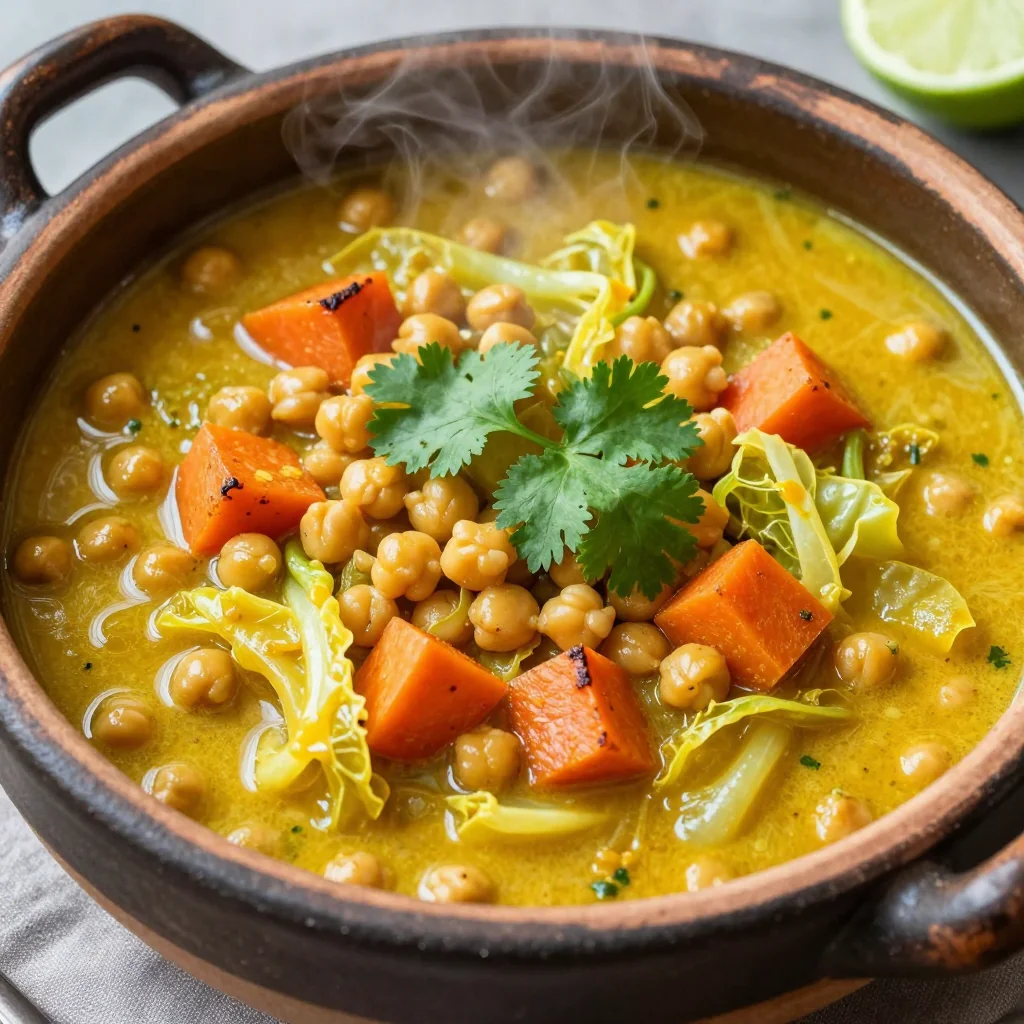
onepot chickpea and cabbage curry with winter root vegetables
Ingredients
Instructions
- Heat the pot: Warm coconut oil in a Dutch oven over medium heat.
- Sauté aromatics: Cook onion with salt 4 min; add garlic & ginger 1 min.
- Bloom spices: Stir in coriander, cumin, paprika, turmeric, cayenne 30 sec.
- Coat vegetables: Add roots & tomato paste; cook 3 min.
- Simmer: Pour in coconut milk, broth, chickpeas, cabbage; simmer 18 min.
- Finish: Stir in lime juice & garam masala; season and serve warm.
Recipe Notes
Store leftovers up to 5 days refrigerated or 3 months frozen. Reheat gently to maintain texture. Adjust salt after reheating—flavors concentrate over time.