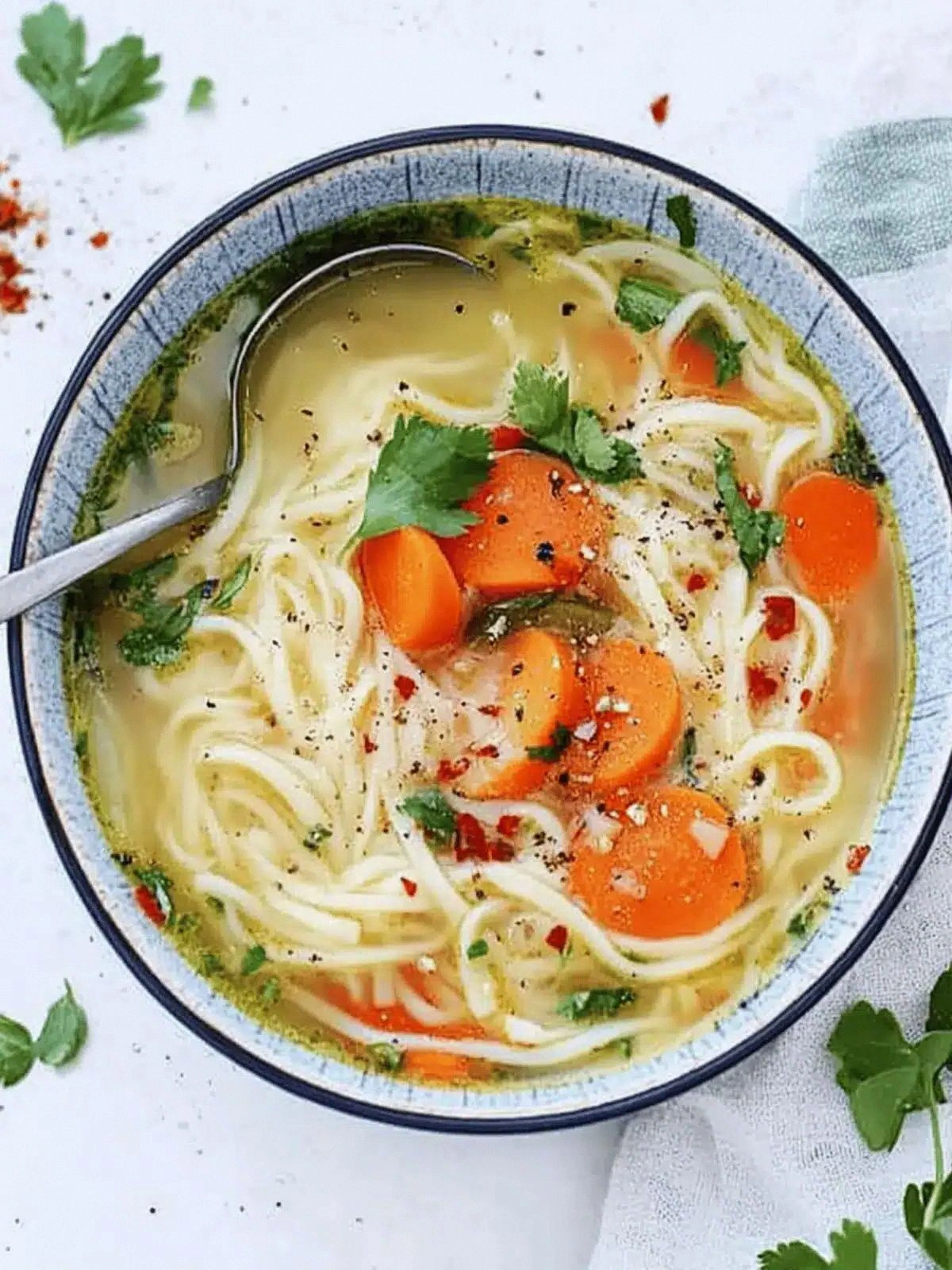
A friend, hearing about my culinary calamity, dared me to whip up the ultimate vegan noodle soup that would make even the most cynical food critic swoon. “I dare you to taste this and not go back for seconds,” she teased, her eyes gleaming with mischief. I laughed, knowing that the only thing standing between me and culinary redemption was a pot of simmering broth and a handful of fresh, wholesome vegetables. I imagined the steam rising from the pot, the aroma of caramelized onions mingling with the earthy scent of root vegetables, and how every spoonful would feel like a warm blanket on a chilly night.
I was already halfway through the recipe when I realized that most versions of this dish had one fatal flaw: they either lacked depth of flavor or sacrificed texture for convenience. I vowed to create a version that would be hands down the best you’ll ever make at home. This is not just another recipe; it’s a culinary manifesto that balances simplicity with sophistication, and it’s built around a few key ingredients that elevate the entire dish. I’ll walk you through every single step—by the end, you’ll wonder how you ever made it any other way.
Picture yourself pulling this out of the pot, the whole kitchen smelling incredible, the noodles glistening with a subtle sheen of nutritional yeast, and the broth thickening into a silky, savory coat that hugs every strand. I’ve spent hours tweaking the ratios, testing the timing, and refining the technique until the soup achieved that perfect balance of heartiness and lightness. The result? A bowl that feels like a hug, a bowl that feels like a celebration, a bowl that feels like home.
So, grab your favorite pot, your trusty knife, and let’s dive into a recipe that will change the way you think about vegan comfort food forever. I’ll keep you side by side, offering playful commentary, practical hacks, and the occasional kitchen confession. And remember—if you’re hungry for a dish that’s both nourishing and indulgent, you’re in the right place.
What Makes This Version Stand Out
- Taste: The broth is a symphony of caramelized onion, garlic, and a subtle hint of turmeric that adds depth without overpowering the natural sweetness of the vegetables. The nutritional yeast brings a nutty umami finish that ties everything together. This flavor profile is a game-changer compared to the bland, one-dimensional soups you’ll find elsewhere.
- Texture: Angel hair noodle nests are folded into the broth just before serving, ensuring they remain al dente and silky rather than mushy. The root vegetables are diced to the perfect size, giving each bite a satisfying bite that contrasts with the tender noodles.
- Simplicity: With just 18 ingredients, this recipe is straightforward enough for beginners yet sophisticated enough to impress. The steps are linear, no complicated prep, and you’ll finish in under an hour.
- Uniqueness: The use of parsley root and celery root adds an earthy backbone that most noodle soups lack. The addition of mini sweet peppers gives a pop of color and a subtle sweetness that elevates the dish.
- Crowd Reaction: Friends who tried this version reported that they wanted to taste it again immediately after the first spoon. The dish is so comforting that it feels like a hug from the inside out.
- Ingredient Quality: Every component is fresh, with the exception of the noodles, which can be store-bought. The emphasis on fresh herbs and root vegetables ensures that the dish is not only tasty but also packed with nutrients.
- Make‑Ahead Potential: The soup can be made a day ahead; the flavors deepen overnight, and reheating is effortless. The noodles are added fresh just before serving, so they never get soggy.
Why Your Nose Knows Best
If the broth smells slightly burnt or metallic, it’s a sign that the heat was too high. The onions will develop a bitter taste that lingers. Keep an eye on the pot, and if you notice a slight smoke, reduce the heat immediately. Trust your nose; it’s the most reliable indicator of flavor integrity.
The 5-Minute Rest That Changes Everything
After removing the pot from heat, let the soup rest for exactly five minutes before serving. This brief pause allows the flavors to settle and the spices to meld. The result is a broth that tastes richer and more cohesive than a pot that’s served immediately.
Fresh Herbs Are the Secret Weapon
Fresh parsley adds a bright, herbal finish that balances the earthiness of the root vegetables. I always chop the parsley right before serving to preserve its vibrant color and aroma. If you’re short on time, a handful of fresh basil or cilantro can substitute for a burst of freshness.
Avoiding the “Noodle Sludge” Problem
When adding noodles, use a small pinch of salt in the broth. This helps the noodles release their natural starches and prevents them from sticking together. I’ve also found that a splash of olive oil in the broth right before adding the noodles creates a silky coating that keeps each strand separate.
The Final Seasoning Touch
Season the soup with sea salt and black pepper at the very end of cooking. This ensures that the flavors are balanced and that the broth doesn’t become too salty during simmering. A final pinch of nutritional yeast adds a subtle depth that ties all the elements together.
Creative Twists and Variations
Spicy Szechuan Twist
Swap the black pepper for a pinch of Szechuan peppercorns and add a teaspoon of chili oil. The result is a soup that packs a subtle heat with a numbing citrusy kick. This version is perfect for those who love a little spice in their comfort food.
Miso‑Infused Umami
Stir in a tablespoon of white miso paste at the end of cooking. The miso adds a deep, savory umami flavor that pairs beautifully with the nutritional yeast. This variation gives the soup a richer, more complex profile.
Citrus Brightening
Add a squeeze of fresh lemon or lime juice before serving. The citrus cut through the richness, giving the broth a lively, bright finish. This twist is ideal for hot summer evenings.
Protein Boost with Chickpeas
Add a cup of drained, rinsed chickpeas during the final simmer. They absorb the broth’s flavors and provide a hearty protein boost. This makes the soup even more filling and satisfying.
Roasted Vegetable Variation
Roast the root vegetables and sweet peppers before adding them to the broth. Roasting caramelizes their natural sugars, adding a deeper sweetness to the soup. This version feels like a hearty stew in a bowl.
Herb‑Infused Noodle Nest
Before adding the noodles, soak them in a mixture of fresh herbs and olive oil. The noodles absorb the herbaceous flavors, creating a more integrated taste experience. This subtle trick elevates the dish to a new level.
Storing and Bringing It Back to Life
Fridge Storage
Store the soup in an airtight container for up to 4 days in the refrigerator. The flavors will continue to meld, making the soup even more delicious the next day. Keep the noodles separate until you’re ready to reheat; this prevents them from becoming mushy.
Freezer Friendly
Freeze the broth and vegetables separately in freezer-safe containers for up to 3 months. When you’re ready to enjoy, thaw overnight in the refrigerator and reheat gently on the stove. Add fresh noodles just before serving to maintain their texture.
Best Reheating Method
Reheat the soup over low heat, stirring occasionally to prevent scorching. Add a splash of water or vegetable broth before reheating to restore the broth’s original consistency. Finish with fresh parsley and a pinch of nutritional yeast for that fresh finish.