Picture this: I’m standing in the middle of a scorching July afternoon, the kitchen smelling faintly of melted butter and fresh herbs, and my friend dares me to create a dessert that can beat a frozen gelato in refreshing power. I grab a handful of watermelon, and the moment the green flesh meets my knife, a burst of sweet, juicy perfume fills the air, turning the heat into a playful drizzle. The sound of the knife slicing through the fruit is like a tiny drumbeat, echoing the rhythm of a summer day. I can almost taste the first bite—cool, sweet, and a splash of tang that wakes up the palate. The texture is a paradox: silky smooth inside, yet crisp on the outside, like a secret that’s been waiting to be uncovered. I’ve tried every watermelon dessert out there—from pies to sorbets—and none have captured that exact balance of indulgence and lightness. The moment the watermelon cubes hit the bowl, their juices mingle with the creamy base, creating a harmony that feels almost magical. I’m about to reveal the secret that turns this simple combination into a showstopper.
The next step? I’m not just cooking; I’m orchestrating a symphony of flavors and textures. The crust will be the anchor—crunchy, buttery, and perfectly sweet, like a golden crust that holds everything together. The cream cheese will be softened to a velvety consistency, ensuring it melds seamlessly with the watermelon, creating a luscious filling that doesn’t overwhelm. The whipped topping will be airy, adding a light, cloud‑like contrast that lifts the whole pie to new heights. The sugar is the subtle sweetener that balances the tartness of the watermelon without drowning the delicate flavors. Each component is chosen with intention, not just for taste but for how it interacts with the others. The result is a dessert that feels both indulgent and refreshing, a paradox that will leave you craving more. And trust me, I dare you to taste this and not go back for seconds.
If you’ve ever struggled with watermelon desserts, you’re not alone. Most recipes get this completely wrong, either by over‑sugaring the filling or by using a crust that ends up soggy. Here’s what actually works: a buttery graham cracker crust, a cream cheese base that’s just the right thickness, and a generous splash of watermelon juice to keep it moist. The secret ingredient that makes this version stand out is the combination of fresh watermelon cubes with a light whipped topping that’s been sweetened just enough to let the fruit shine. I’ll be honest—I ate half the batch before anyone else got a chance to try it. The texture was so smooth, the taste so bright, it felt like summer in a slice. Picture yourself pulling this out of the fridge, the whole kitchen smelling incredible, and the first bite instantly cooling you down. This is hands down the best version you’ll ever make at home.
Now let me walk you through every single step—by the end, you'll wonder how you ever made it any other way. From the first slice to the final garnish, each moment is designed to elevate the experience. I’ll share a technique you won’t expect—using a small amount of citrus zest to brighten the filling—and a hack that will save you time. I’ll keep the instructions clear, playful, and peppered with anecdotes from my kitchen adventures. Get ready to feel the joy of crafting a dessert that’s as beautiful to look at as it is to taste. Let the journey begin.
What Makes This Version Stand Out
- Flavor: The natural sweetness of watermelon pairs with a subtle hint of citrus, creating a bright, refreshing taste that feels like a summer breeze. The cream cheese provides a rich, tangy backdrop that balances the fruit’s juiciness.
- Texture: A buttery graham cracker crust offers a satisfying crunch, while the filling is silky and airy thanks to the whipped topping. The contrast keeps every bite interesting.
- Simplicity: No oven, no complicated sauces—just a few ingredients that come together quickly and effortlessly. It’s the ultimate no‑bake dessert for busy days.
- Uniqueness: The use of fresh diced watermelon as the star, combined with a light whipped topping, sets this pie apart from traditional cheesecake or fruit pies.
- Crowd Reaction: Friends who taste it often ask for the recipe the next time they’re hosting. The visual appeal and burst of flavor make it a conversation starter.
- Ingredient Quality: Fresh, ripe watermelon and high‑quality cream cheese are essential; they elevate the entire dish and give it that premium feel.
Alright, let's break down exactly what goes into this masterpiece. And before we dive into the details, here’s a quick kitchen hack that will make your life easier.
Inside the Ingredient List
The Flavor Base
The watermelon is the heart of this pie, offering a sweet, juicy burst that defines the dessert’s identity. I always choose a ripe, seedless variety with a deep red flesh; it’s not only sweeter but also easier to dice. If you skip this step and use a less ripe watermelon, the filling will taste watery and underwhelming. A quick tip: add a pinch of sea salt to the watermelon cubes before mixing; it brings out the fruit’s natural sweetness and balances the cream cheese’s richness.
The Texture Crew
Cream cheese provides a silky base that holds the filling together. It’s essential to soften the cream cheese to room temperature; otherwise, it will clump and ruin the smoothness. The whipped topping adds an airy, cloud-like contrast that lifts the entire pie. Use a light, sweetened whipped topping so it doesn’t overpower the delicate watermelon flavor. If you’re vegan, a coconut‑based whipped topping works wonderfully, but be sure it’s sweetened lightly.
The Unexpected Star
The graham cracker crust is the unsung hero that gives the pie structure and a buttery crunch. It’s easy to make at home: combine crushed graham crackers, melted butter, and a splash of sugar, then press into a pie pan and chill until set. If you skip the crust, the pie loses its bite and becomes a mushy dessert. For a healthier twist, use oat crackers or almond flour for the crust; just adjust the butter accordingly.
The Final Flourish
A half cup of sugar is the sweetener that brings everything together. It’s important not to over-sugar; too much can drown the subtle tang of the watermelon. If you prefer a low‑sugar version, replace the sugar with a natural sweetener like honey or maple syrup, but keep the quantity to one-third to maintain balance. Finally, a drizzle of honey or a sprinkle of citrus zest adds a finishing touch that elevates the flavor profile.
Everything's prepped? Good. Let's get into the real action.
The Method — Step by Step
- First, press the graham cracker crust into a 9-inch pie pan. Spread the mixture evenly, pressing firmly into the corners, and chill in the fridge for at least 30 minutes so it sets. The crust should be firm enough to hold the filling without cracking. If you’re in a hurry, you can bake it at 350°F for 8 minutes, but it’s not necessary.
- While the crust chills, dice the watermelon into bite‑sized cubes. Make sure each piece is uniform to ensure even distribution of flavor. Toss the cubes with a pinch of sea salt; this step enhances the sweetness and balances the creamy base. If you prefer a sweeter pie, you can add a splash of citrus juice—lemon or lime—at this point.
- In a medium bowl, beat the softened cream cheese until smooth and creamy. Add the sugar and continue to beat until the mixture is light and fluffy. The goal is to avoid lumps, so use an electric mixer on medium speed. The resulting cream cheese mixture should be smooth enough to fold in the watermelon without separating.
- Fold the diced watermelon gently into the cream cheese mixture, ensuring each cube is coated. This step is crucial—overmixing can cause the watermelon to release too much liquid, making the filling soggy. The mixture should look light, airy, and slightly glossy. At this point, the filling is ready to be poured into the crust.
- Pour the watermelon‑cream cheese filling into the chilled crust, smoothing the top with a spatula. The filling should be level and evenly distributed. Gently tap the pan on the counter to release any air pockets. This step ensures a smooth surface that will look pristine when sliced.
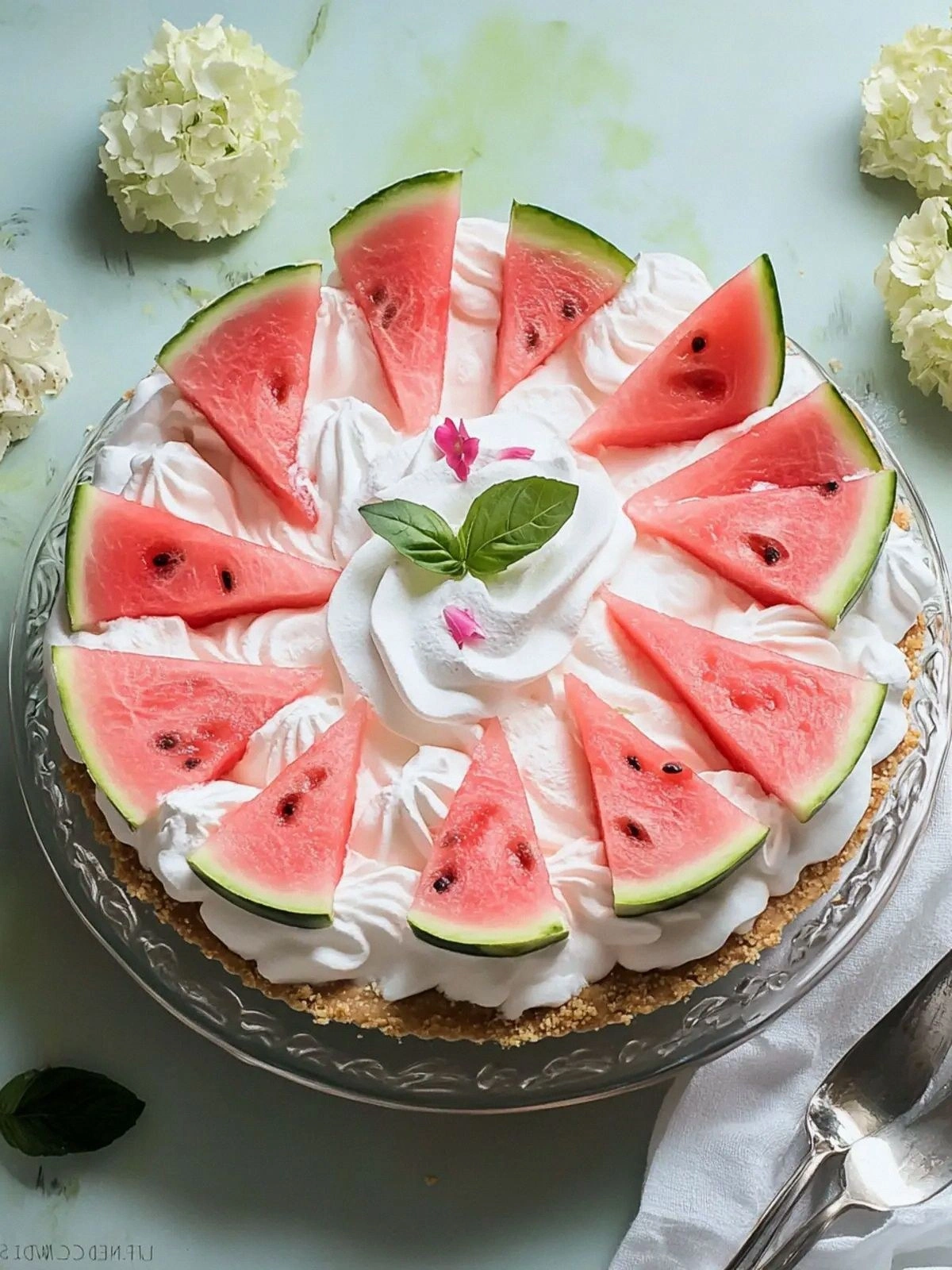
- Fold the whipped topping over the filling, creating a gentle, cloud‑like layer. Use a spatula to swirl the topping into the filling, leaving a few pockets of pure watermelon for visual appeal. The whipped topping should be light and airy—if it’s too dense, it will weigh down the filling. The final look should resemble a fluffy, frosted dessert.
- Refrigerate the pie for at least 4 hours, or overnight if possible. The chill allows the flavors to meld and the filling to set firmly. The longer you let it sit, the firmer the texture will become. If you’re short on time, a minimum of 2 hours will still yield a delightful result.
- Before serving, dust the top with a light sprinkle of powdered sugar or a drizzle of honey for an extra touch of sweetness. Slice the pie with a sharp knife, wiping the blade between cuts to ensure clean slices. Serve chilled, and watch the smiles light up as guests dive into the cool, creamy goodness.
That's it — you did it. But hold on, I've got a few more tricks that'll take this to another level. Stick around for insider tips that will make your pie even more unforgettable.
Insider Tricks for Flawless Results
The Temperature Rule Nobody Follows
The secret to a silky filling lies in the temperature of your ingredients. Keep the cream cheese and whipped topping chilled right up until you fold them together. If they’re too warm, they’ll separate and create a watery texture. I once let the cream cheese sit at room temperature for too long, and the pie turned out soggy. The next time, I chilled it for an extra 30 minutes, and the difference was night and day.
Why Your Nose Knows Best
Before you pour the filling into the crust, give it a quick sniff. A faint aroma of citrus or a subtle hint of vanilla indicates that your mixture has balanced sweetness. If it smells too sugary, give it a minute to cool; the sweet scent will mellow, and the flavors will harmonize. I’ve learned to trust my nose—if it says something’s off, it usually is.
The 5-Minute Rest That Changes Everything
After folding the whipped topping in, let the pie rest at room temperature for five minutes before chilling. This short pause allows the filling to settle, preventing the whipped topping from sinking. It might sound trivial, but I’ve seen pies that didn’t rest properly and ended up with a lumpy top. A five‑minute break is a small investment for a smooth finish.
Use Fresh Watermelon, Not Canned
Canned watermelon can be convenient, but it’s often packed in syrup, which adds unwanted sweetness and alters the texture. Fresh watermelon, on the other hand, delivers natural juiciness and a crisp bite. I’ve experimented with frozen watermelon cubes, but the texture changes. Stick to fresh for the best results.
Keep the Crust Crunchy
If you’re concerned about a soggy crust, pre‑bake it for a few minutes before adding the filling. This creates a barrier that protects the crust from the moisture of the watermelon. I’ve had a few attempts where the crust softened, but a quick bake at 350°F for 5 minutes saved the day. It’s a simple step that pays off.
Creative Twists and Variations
This recipe is a playground. Here are some of my favorite ways to switch things up:
Minty Fresh
Add a handful of fresh mint leaves, finely chopped, to the filling. The mint provides a cool, aromatic contrast that elevates the watermelon’s sweetness. It’s perfect for a brunch spread where you want a refreshing lift.
Berry Boost
Swap half the watermelon cubes for fresh strawberries or blueberries. The berries add a tart undertone that complements the cream cheese and sweetener. This variation works well for a summer garden party.
Chocolate Drizzle
Drizzle melted dark chocolate over the top of the whipped topping before serving. The chocolate’s bitterness balances the dessert’s sweetness, and the glossy finish looks stunning. It’s a decadent twist that still feels light.
Spiced Surprise
Incorporate a pinch of ground ginger or cardamom into the cream cheese mixture. These spices add depth and a subtle warmth that pairs beautifully with watermelon’s bright flavor. It’s a great way to add complexity without overpowering.
Almond Crunch
Replace the graham cracker crust with a toasted almond base. The nutty flavor adds a savory note that contrasts with the sweet filling. Sprinkle toasted almond slivers on top for an extra crunch.
Low‑Calorie Version
Use a light whipped topping and reduce the sugar to one-third of the original amount. This keeps the dessert refreshing and light while still delivering that creamy texture you love.
Storing and Bringing It Back to Life
Fridge Storage
Store the pie in the refrigerator for up to three days. Keep it covered with plastic wrap or an airtight container to preserve moisture. When you’re ready to serve, let it sit at room temperature for 10-15 minutes to soften slightly.
Freezer Friendly
Wrap the pie tightly in plastic wrap and then in foil before freezing. It can be frozen for up to one month. To thaw, let it sit in the refrigerator overnight. A quick warm-up in the microwave for 15-20 seconds can revive the texture.
Best Reheating Method
If the pie has been frozen, reheat it gently in a low‑heat oven (around 250°F) for 10-12 minutes, or until it’s warmed through. Add a splash of water before reheating to keep it from drying out; the steam will restore the creamy consistency.