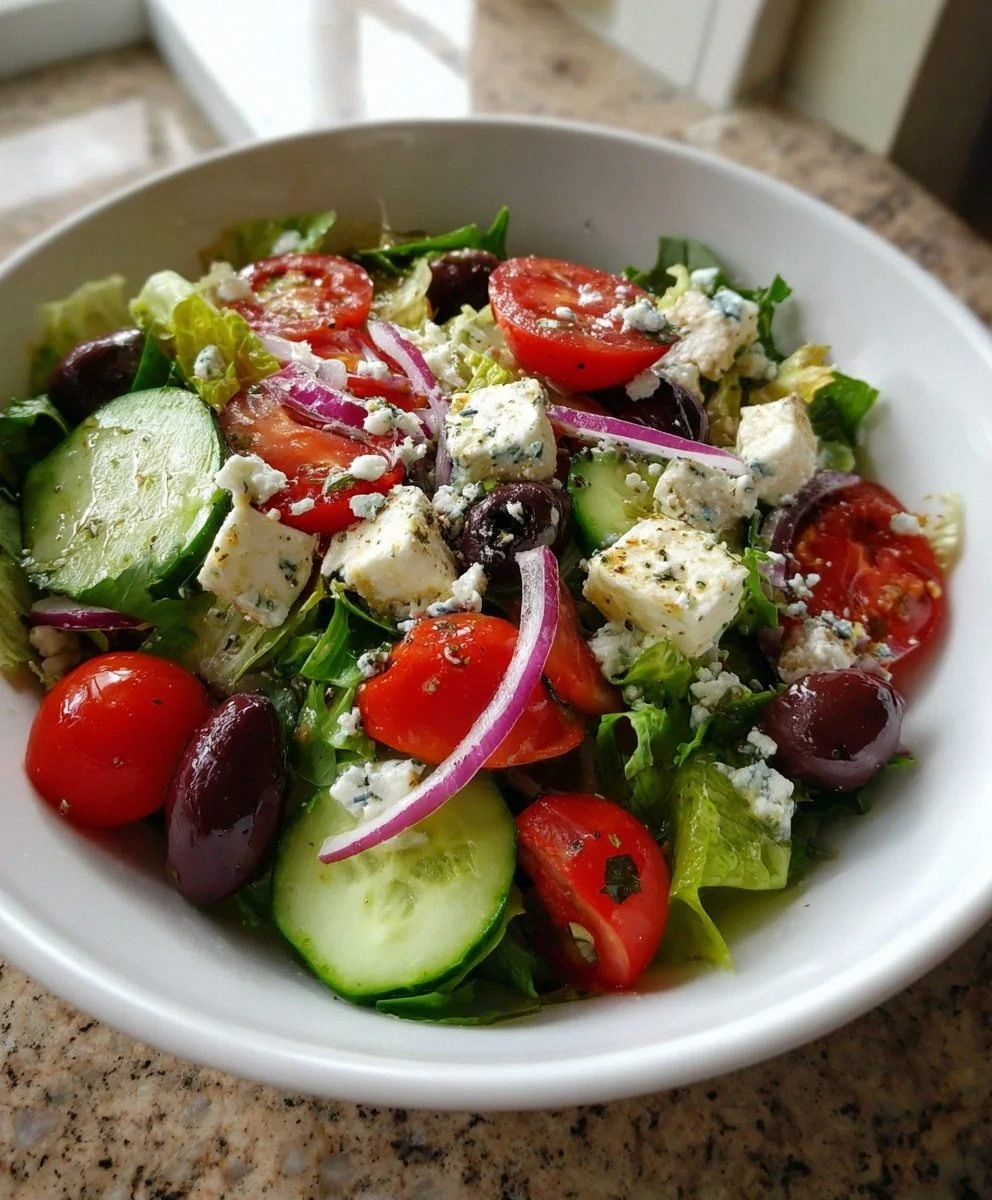
I'll be honest — I used to think salad was just what you ate when you'd given up on joy. Those sad desk lunches of limp lettuce and watery tomatoes haunted me for years, until one blistering August afternoon when my Greek neighbor Sophia thrust a bowl into my hands that changed everything. The colors alone could've powered a small city: emerald leaves that actually crunched, ruby tomatoes bleeding sweet juice, cucumber moons so cold they fogged the bowl. One bite and I was that cartoon wolf whose eyes pop out on springs. The dressing! That lemon-garlic elixir with oregano that made my tongue do backflips. I begged for the recipe, but she just winked and said, "It's nothing special." Nothing special? I spent three months recreating that nothing-special, testing seventeen varieties of feta, growing my own herbs, even smuggling olive oil back from Crete in checked luggage like some kind of culinary drug mule.
Most Mediterranean salad recipes get it completely wrong. They treat it like a sad afterthought — some lettuce, a few sad olives, bottled dressing that tastes like disappointment. But here's what actually works: you need to think like a Greek grandmother. Every component has to earn its place, every vegetable needs to be at peak arrogance, and the dressing should be so good you'd drink it straight. The real secret? It's all in the timing and the treatment. Those cherry tomatoes need to marinate in salt for ten minutes to concentrate their flavor. The red onion must soak in vinegar to remove that harsh bite that makes your date recoil. And the herbs — oh, the herbs should be so fresh they still hold morning dew.
Picture yourself pulling this together on a Tuesday night when it's too hot to cook. Your kitchen windows are open, that salty breeze is drifting in, and you're assembling what looks like a produce department exploded in the most beautiful way possible. The scent of crushed oregano hits first, then that bright citrus as you whisk the dressing. By the time you shower everything with that brick of Greek feta, you're already planning your second helping. Because here's the thing — this isn't just a salad, it's a mood. It's that vacation feeling you get from good tomatoes and better olive oil, the way food tastes when you're barefoot and slightly sun-drunk on a Mediterranean afternoon.
Let me walk you through every single step — by the end, you'll wonder how you ever made it any other way. We're building layers of flavor here, people. Crispy vegetables that snap between your teeth, creamy cheese that melts on your tongue, and a dressing so balanced it could negotiate world peace. Plus I've got some tricks that'll make your dinner guests think you've been secretly studying under a Greek yiayia for decades.
What Makes This Version Stand Out
Most recipes get this completely wrong. They throw everything in a bowl and call it Mediterranean, but that's like putting a beret on a hamburger and calling it French cuisine. Here's what actually separates the memorable from the mediocre:
- Crunch Engineering: We're using three different greens with varying textures — crisp romaine hearts for structure, peppery arugula for bite, and baby spinach for that soft, buttery contrast. Each leaf is treated differently to maximize its natural character.
- Tomato Transformation: Instead of just slicing and tossing, we salt our cherry tomatoes for exactly ten minutes. This draws out excess water, concentrating flavor until each orb becomes a tiny flavor bomb that explodes sweet juice when you bite down.
- The Onion Whisperer Method: Raw red onion gets a quick vinegar bath that removes the harsh sulfur compounds while keeping that beautiful purple color. You get all the crunch and mild sweetness, none of the dragon breath.
- Feta Strategy: We buy it in block form and break it ourselves — those pre-crumbled versions are coated with anti-caking agents that mute flavor. Plus, irregular chunks mean some bites are creamier than others, keeping things interesting.
- Herb Timing: Fresh herbs go in at two different stages. Robust oregano and mint get massaged into the dressing to release oils, while delicate parsley gets scattered on top just before serving so it stays perky and bright.
- Olive Oil Respect: We're using two types — a fruity Greek extra virgin for the dressing, and a milder one for tossing the greens. Because nobody wants their salad to taste like they're drinking olive oil straight from the bottle.
- Pepper Revelation: Fresh cracked black pepper goes on the tomatoes while they salt, not in the dressing. This creates tiny flavor pockets that bloom as the tomatoes marinate, giving you little spicy surprises in every bite.
Alright, let's break down exactly what goes into this masterpiece...
Inside the Ingredient List
The Green Foundation
The greens are your canvas, and we're going full Monet here. Romaine hearts give you that satisfying crunch that makes you feel like you're eating something substantial, not just rabbit food. Look for heads that feel heavy for their size — that's water content, which translates to crispness. The base should be bright white, not brown and mushy like it's been sitting in someone's fridge since the Clinton administration. Arugula brings the party with its peppery bite that tingles the back of your throat in the best way. Don't buy the pre-washed stuff in plastic clamshells; it's been sitting around so long it's lost its personality. Get the loose bunches that still have some life in them, the kind that make your hands smell like a spring garden when you tear them.
The Mediterranean All-Stars
Cucumbers need to be the English variety — those thick-skinned regular ones have tough seeds that'll ruin the delicate balance. We're peeling them in stripes, leaving some green for color and texture contrast. Cherry tomatoes should be on the verge of splitting with ripeness, the kind that stain your cutting board red. If they don't smell like anything when you hold them up, put them back and find a better store. Kalamata olives are non-negotiable; those canned black olives taste like sadness and regret. Look for ones still in brine, wrinkled and dark as midnight. And the feta — oh, the feta should be made from sheep's milk, crumbly yet creamy, with that perfect salty tang that makes you understand why Greeks live forever.
The Flavor Amplifiers
Red onion gets the VIP treatment here. We're slicing it paper-thin on a mandoline, then bathing it in red wine vinegar for exactly fifteen minutes. This isn't just for flavor — it transforms the texture from harsh and crunchy to silky and mild, while that beautiful purple color stays vibrant. Fresh oregano is a game-changer; those dried flakes taste like dusty library books. Strip the leaves from woody stems — they should smell like the Greek countryside after rain. Garlic gets microplaned so it melts into the dressing, no harsh chunks to bite into. And lemon — only fresh, never that bottled stuff that tastes like furniture polish.
The Unexpected Game-Changers
Here's where we get a little wild. We're adding a handful of toasted pine nuts for richness and crunch that plays against all those fresh vegetables. Toasting them in a dry pan until they smell like butter and pine forests — but watch them like a hawk, they go from perfect to burnt faster than you can say "opaa!" A few slices of pepperoncini bring that vinegary heat that makes your lips tingle. Not enough to overwhelm, just enough to keep things interesting. And the final flourish — a drizzle of Greek honey in the dressing. Just a touch to balance the acid, not enough to make it sweet. It's like the bass line in a song — you don't notice it's there, but you'd miss it if it were gone.
Everything's prepped? Good. Let's get into the real action...
The Method — Step by Step
- Start with the tomato transformation: Halve your cherry tomatoes and toss them with a generous pinch of kosher salt and several cracks of fresh black pepper. Let them sit in a colander over a bowl — you'll be amazed how much water drains out. This concentrates their flavor like you wouldn't believe, turning regular supermarket tomatoes into something that tastes like they were kissed by the Mediterranean sun. While they drain, you can prep everything else, but don't skip this step. I dare you to taste one after ten minutes and not go back for seconds.
- Tame the onion beast: Slice your red onion as thin as humanly possible — if you can read newspaper through it, you're on the right track. Submerge those purple ribbons in red wine vinegar with a pinch of salt. This isn't just about removing harshness; it's about transforming the texture into something silky and luxurious. Set a timer for fifteen minutes, no more, no less. Too short and you get onion breath for days; too long and they lose their structural integrity and go mushy.
- Build your dressing base: In a small bowl, whisk together the juice of one lemon, two tablespoons of red wine vinegar, one clove of microplaned garlic, a teaspoon of Dijon mustard, and a drizzle of honey. The mustard acts as an emulsifier, keeping everything suspended in perfect harmony. Whisk in your best olive oil in a slow stream — it should come together like liquid gold. Add fresh oregano leaves, tearing them gently to release oils. Taste and adjust; it should make your mouth pucker slightly, then smooth out with that honey finish.
- Toast your pine nuts: Heat a dry skillet over medium heat and add your pine nuts. Now here's the crucial part — don't walk away. Shake that pan like you're mixing a cocktail, watching for the color to deepen just one shade. When they smell like butter and pine forests, immediately dump them onto a plate. They'll continue cooking from residual heat, and burnt pine nuts taste like bitter regret. This takes about three minutes if you're paying attention, thirty seconds if you're scrolling Instagram.
- Prep your cucumber with style: Peel your English cucumber in alternating stripes, leaving some green for visual appeal. Cut it lengthwise, then slice into half-moons about a quarter-inch thick. This gives you pretty crescents that catch the dressing in their curves. If your cucumber seems watery, salt it lightly and let it drain for five minutes — nobody wants a soggy salad situation.
- Massage your greens: Here's where most people mess up. Romaine needs to be torn, not cut — a sharp knife bruises the leaves, making them brown and sad. Tear into bite-sized pieces, then wash and spin them absolutely dry. Water is the enemy of dressing adherence. Toss the arugula and spinach in a separate bowl with just a whisper of olive oil — this coats them lightly so they don't wilt under the dressing's acid assault.
- The great assembly: In your largest bowl, combine the romaine with half the dressing, tossing gently but thoroughly. You want every leaf glistening, not drowning. Add the arugula and spinach mixture, the marinated tomatoes (drained but save that tomato water for bloody marys), cucumbers, olives, and those silky onion strands. Toss again, adding dressing gradually — you can always add more, but you can't take it away. Crumble the feta over the top in large, rustic chunks.
- The final flourish: Shower everything with fresh parsley, scatter your toasted pine nuts like precious gems, and give one final drizzle of olive oil around the edges. This isn't just for show — that last hit of fresh oil gives you that restaurant shine. Serve immediately, preferably outside, with crusty bread to mop up the dressing that pools at the bottom. That sizzle when the dressing hits the warm plate? Absolute perfection.
That's it — you did it. But hold on, I've got a few more tricks that'll take this to another level...
Insider Tricks for Flawless Results
The Temperature Rule Nobody Follows
Here's the thing that separates restaurant salads from home attempts — temperature matters more than you think. Your greens should be ice-cold, straight from the fridge, but your dressing should be room temperature. Cold greens stay crisp longer, while room-temp dressing flows better and coats more evenly. I keep my salad plates in the freezer for five minutes before serving. That shock of cold when it hits the table? That's the difference between good and unforgettable. A friend tried skipping this step once — let's just say it didn't end well. The salad wilted faster than my enthusiasm for her dinner party.
Why Your Nose Knows Best
Before you add any ingredient, smell it. Really smell it. That tomato should smell like summer, the oregano like a Greek mountainside, the olive oil like fresh grass and pepper. If an ingredient doesn't have a scent, it won't have flavor. I learned this from a produce vendor in Athens who refused to sell me tomatoes until I closed my eyes and inhaled deeply. "You buy with nose first, eyes second," he said, waving away my money. He was right — those tomatoes were the best I've ever tasted, and now I smell everything before it goes in the bowl.
The 5-Minute Rest That Changes Everything
After you dress the salad, let it sit for exactly five minutes before serving. This isn't laziness — it's strategy. Those five minutes let the dressing penetrate just slightly into the tougher vegetables, while the greens stay crisp. It's like a flavor handshake where everyone gets introduced but nobody gets overwhelmed. Set a timer, pour yourself a glass of wine, and pretend you're in a taverna overlooking the Aegean. Your patience will be rewarded with a salad where every element is in perfect harmony.
The Feta Water Secret
Don't drain your feta completely. That briny water clinging to the cheese? It's liquid gold. When you crumble it over the salad, those little droplets distribute concentrated flavor bombs throughout. Some bites will be saltier, others creamier — it creates a dynamic eating experience that keeps you coming back for more. I discovered this by accident when I was too lazy to pat the feta dry, and now it's my favorite "mistake."
The Double Olive Oil Technique
We're using olive oil twice here, but in different ways. First, a light coating on the delicate greens to protect them from the dressing's acid. Then the good stuff in the dressing itself. The protective coat keeps your arugula from wilting into a sad, soggy mess. Think of it as salad armor — medieval knights had chainmail, your greens have a whisper-thin layer of oil.
Creative Twists and Variations
This recipe is a playground. Here are some of my favorite ways to switch things up:
The Protein Powerhouse
Add a cup of cooked chickpeas that have been tossed with olive oil, salt, and smoked paprika, then roasted until their skins blister and crack. They add a meaty texture that turns this from side dish to main course. The smoky paprika plays beautifully against the bright lemon dressing, and those crispy little nuggets give you something to hunt for in every bite. Perfect for when you need lunch to carry you through until dinner without that 3 PM crash.
The Coastal Edition
Fold in some chopped marinated anchovies and replace the pine nuts with toasted slivered almonds. The anchovies dissolve into the dressing, adding incredible depth without fishiness — just that mysterious umami that makes people ask, "What's in this?" Top with grilled shrimp that have been kissed with lemon zest and oregano. Suddenly you're not in your kitchen anymore; you're at a seaside taverna where the wine flows and time moves differently.
The Winter Warrior
When tomatoes are sad and pale, swap them for roasted red peppers from a jar (the good ones, not the sour ones from the grocery store salad bar). Add some thinly sliced fennel bulb for that crisp anise flavor, and replace the cucumber with peeled orange segments. The citrus keeps things bright when everything else is root vegetables and despair. A handful of pomegranate seeds adds jewel-like color and tart pops that make you forget it's been gray outside for weeks.
The Mezze Mashup
Turn this into a deconstructed Greek salad by adding chopped dill, swapping the feta for thick slabs of halloumi that you've seared until golden, and stirring in some cooked orzo pasta. The cheese stays firm and gets those crispy edges that shatter like thin ice, while the orzo soaks up the dressing like tiny flavor sponges. It's what happens when Greek salad and pasta salad have a beautiful baby together.
The Spice Route
Add a teaspoon of sumac to the dressing for a tangy, lemony flavor that's different from actual lemon — more complex, more mysterious. Toss in some chopped preserved lemon peel and a handful of chopped fresh mint. Replace the pine nuts with pistachios, and suddenly you're not in Greece anymore; you're somewhere along the ancient trade routes where spices were worth more than gold. The sumac gives everything a dusty purple hue that's absolutely gorgeous.
The Breakfast Champion
Top this with a soft-boiled egg that, when broken, creates a warm, runny dressing that mingles with the vinaigrette. Add some crispy prosciutto that you've baked until it shatters like bacon glass. Suddenly salad for breakfast doesn't seem like punishment — it seems like the best decision you've made since you decided to take that pottery class. The egg yolk creates this luxurious sauce that clings to every vegetable like velvet.
Storing and Bringing It Back to Life
Fridge Storage
Here's where most people go wrong — they store the dressed salad and wonder why it turns into a soggy science experiment. Store everything separately: greens in one container with a paper towel to absorb moisture, chopped vegetables in another, dressing in a jar, feta in its own brine. When stored properly, the components last for days. The dressed greens? They're a same-day affair, but that's what makes them special. If you absolutely must prep ahead, dress the sturdy vegetables (cucumbers, tomatoes, onions) and keep them marinating — they actually get better overnight. Add the greens and fresh herbs just before serving.
Freezer Friendly
Okay, don't freeze the salad — that's madness. But you can freeze the dressing in ice cube trays, then pop out a few cubes when you need them. They thaw quickly and you've got instant Mediterranean flavor. You can also freeze chopped herbs in olive oil using the same method — little herb bombs that melt into hot pasta or soups. The feta doesn't freeze well (it gets crumbly and weird), but you can freeze the pine nuts for up to six months. Toast them straight from frozen; they'll take an extra minute but taste just as good.
Best Reheating Method
Salad doesn't reheat — that's not how this works. But if you've got leftover dressed salad that's gone a bit sad, don't throw it out. Whiz it in a blender with some additional olive oil and you've got an amazing green goddess-style dressing for roasted vegetables. Or chop it finely and mix with cream cheese for a Mediterranean spread that'll make your bagel weep with joy. The key is transforming it into something new rather than trying to resurrect the original. Waste not, want not, and all that.