I still remember the first time I attempted osso buco in my cramped apartment kitchen. The butcher had handed me four thick cross-cut veal shanks tied with kitchen twine like little meaty presents, and I had no idea what I was doing. The recipe I found online called for "browning the meat," but it didn't mention that my smoke detector would start screaming like a banshee, or that my neighbor would bang on the wall because apparently searing meat at 11 PM on a Tuesday isn't neighborly behavior. Fast forward through three failed attempts, two pans of scorched onions, and one very expensive grocery bill, and I finally cracked the code. What emerged from my Dutch oven that fourth time wasn't just dinner—it was a revelation. The meat fell off the bone like it was giving up on life entirely, swimming in this mahogany sauce that tasted like Sunday afternoons in Milan and grandmother hugs all rolled into one.
Here's the thing about osso buco that nobody tells you: it's actually a diva dish disguised as humble comfort food. Those picture-perfect restaurant versions? They've got secrets. The marrow stays molten, the sauce achieves that impossible silkiness, and the meat maintains its structure while surrendering to the slightest nudge of a fork. Most home cooks miss these details because they're following recipes written by people who've never stood over a pot wondering why their sauce tastes like metallic tomatoes instead of the rich, complex masterpiece they're expecting. I've been that confused cook, and I'm here to pull back the curtain on what actually works—no culinary school required, just a willingness to trust your nose and maybe drink a little wine while you cook.
Picture yourself pulling this out of the oven, the whole kitchen smelling like you've been transported to a trattoria where nonnas rule the kitchen and time moves slower. The aroma hits you first—wine and tomatoes and the deep, almost nutty scent of veal that's been coaxed into tenderness. Your spoon breaks the surface of the sauce, and it parts like velvet curtains, revealing meat that's been transformed by three hours of gentle simmering from tough and intimidating to something that barely needs chewing. That first bite? It's going to ruin other stews for you forever. The marrow slides out of the bone cavity like liquid gold, and you're supposed to mix it into the sauce, but honestly, I won't judge if you scoop it straight onto crusty bread like the caveperson of luxury you suddenly become.
What makes this version different from every other osso buco recipe cluttering the internet? I obsessed over the details that others skip. The proper searing technique that builds fond without burning. The exact moment to flip the meat so it doesn't stick and tear. The wine reduction that concentrates flavors instead of just making everything taste like grape juice. The gremolata timing that keeps the parsley bright instead of sad and wilted. Let me walk you through every single step—by the end, you'll wonder how you ever made it any other way.
What Makes This Version Stand Out
Restaurant-Quality Texture: The meat achieves that spoon-tender perfection where it holds shape but collapses at the slightest pressure. No more chewy veal or stringy, overcooked disasters. The secret lies in maintaining the perfect simmer temperature and resisting the urge to rush things.
Depth-Building Technique: Instead of just dumping everything in a pot, we build layers of flavor through proper searing, deglazing, and reduction. Each step concentrates the sauce until it reaches that glossy, coating consistency that clings to meat like it never wants to let go.
Foolproof Timing: Most recipes give vague timing that leaves you guessing. This version provides clear visual and aromatic cues so you know exactly when to move to the next step. Your nose becomes your kitchen timer, and it's never been more reliable.
Make-Ahead Magic: This dish actually improves overnight, making it perfect for dinner parties. The flavors marry and deepen, and you can skim off the fat that solidifies on top. Reheat gently and serve to impressed guests who think you slaved all day.
Ingredient Integrity: We use real veal shanks, not the mystery meat some recipes suggest. The marrow is non-negotiable—it's nature's butter and the soul of this dish. Skimp here, and you'll wonder why your osso buco tastes like ordinary beef stew.
Authentic Gremolata: That bright, zesty finishing touch isn't an afterthought. We add it at the perfect moment so the lemon zest stays vibrant and the parsley keeps its fresh bite, cutting through the richness like a beam of Italian sunshine.
Confidence Building: Even if you've never braised anything in your life, this recipe walks you through every moment. By the end, you'll feel like you've unlocked a secret level in your cooking game, ready to tackle any braised dish with swagger.
Inside the Ingredient List
The Foundation Players
The veal shanks are obviously the star here, but don't just grab any old package. Look for cross-cuts about two inches thick, with the bone in the center and that precious marrow cavity intact. The meat should be pale pink with a fine grain, not gray or slimy. If your butcher only has thicker cuts, that's fine—just increase your cooking time. And please, don't substitute regular beef shanks and expect the same delicate flavor. Veal has this subtle sweetness and tenderness that makes osso buco what it is. If you absolutely can't find veal, young beef shanks work, but you'll need to cook them longer and the flavor will be more robust.
Your soffritto—onion, carrot, and celery—is the aromatic backbone that separates Italian braises from everything else. Dice them small and even so they melt into the sauce rather than staying chunky. The ratio matters here: twice as much onion as carrot and celery combined. This isn't a democracy; it's a carefully balanced flavor ecosystem where onion provides sweetness, carrot adds depth, and celery brings that mysterious savory note you can't quite identify but would miss immediately if it disappeared.
The Liquid Gold Components
White wine gets all the attention, but here's what actually matters: use something dry and Italian if possible. That means Pinot Grigio or Verdicchio, not your aunt's sweet Riesling. The wine needs to have enough acidity to balance the tomatoes and enough character to stand up to three hours of cooking. Cheap cooking wine ruins everything—it tastes like vinegar and regret. Spend a few extra dollars on something you'd actually drink, because you'll taste every penny in the final dish.
Crushed tomatoes should be the good San Marzano variety, or don't bother. I know, I know, they're expensive. But here's the thing: you're making four servings of what should be an extraordinary meal, and using $2 canned tomatoes versus $4 canned tomatoes breaks down to fifty cents per serving. Your taste buds can absolutely detect the difference between tomatoes grown in volcanic soil under the Mediterranean sun and whatever sad specimens get canned in the generic brand. The sauce will be brighter, sweeter, and more complex with the real deal.
The Aromatic Ringers
Garlic in osso buco is controversial—some traditional recipes omit it entirely. I land firmly in the pro-garlic camp, but restraint is key. Two cloves, smashed and removed after the soffritto cooks, provide just enough backbone without turning this into garlic stew. The trick is letting the garlic perfume the oil, then fishing it out before it browns and turns bitter. Think of it as garlic's cameo appearance rather than a starring role.
Lemon zest in the gremolata isn't just garnish—it's the high note that makes the whole dish sing. Use organic lemons if possible, and zest only the yellow part. The white pith underneath is bitter and will ruin everything. Microplane is your friend here; you want feathery threads that will disperse through the sauce, not chunky pieces that feel like you're eating lemon peel.
The Final Flourish
Parsley for gremolata needs to be flat-leaf, not curly. Curly parsley tastes like lawn clippings and has the texture to match. Flat-leaf parsley has actual flavor—grassy and fresh with a slight peppery bite. Chop it at the last possible second; the longer it sits, the more it oxidizes and turns that unappetizing khaki color. If you're making this ahead, prep everything except the gremolata and add it right before serving.
The Method — Step by Step
- Pat those veal shanks absolutely dry with paper towels—I'm talking obsessive-level drying. Any moisture on the surface will steam instead of sear, and you'll miss out on the gorgeous brown fond that forms the flavor foundation. Season aggressively with salt and pepper on both sides. This is your only chance to season the meat itself; the sauce will season everything later, but the meat needs its own salt coat. Heat olive oil in your heaviest Dutch oven over medium-high heat until it shimmers and moves like water. When you think it's hot enough, wait another minute—proper searing temperature is hotter than most home cooks realize.
- Lay the shanks in the pot without crowding—work in batches if necessary, because crowded meat steams instead of browns. Don't touch them for a full three minutes. I know it's tempting to peek, but leave them alone. When they're ready to flip, they'll release naturally from the pan. If you have to tear them away, they're not ready. Brown them on both sides until they're deeply caramelized, almost mahogany. This isn't just for color—those brown bits are where the deep, complex flavors live. Remove to a plate and tent with foil.
- Reduce heat to medium and add your diced onion, carrot, and celery. The vegetables should sizzle gently, not scream. Cook them slowly, stirring occasionally, until they soften and the onion turns translucent—about 8 minutes. This isn't the time for caramelization; you want them to melt into the sauce, not brown and crisp. Add the smashed garlic cloves and cook for another minute until fragrant. Your kitchen should smell like an Italian grandmother's kitchen at this point—if it doesn't, you did something wrong.
- Pour in the white wine and crank the heat back to high. This is the moment of truth—the wine will deglaze the pan, lifting all those beautiful brown bits into the sauce. Let it bubble aggressively for about 5 minutes, reducing by half. The alcohol needs to cook off, leaving behind just the wine's fruit and acid. When you can drag your spoon through the pan and see the bottom for a second before the sauce flows back, you're there. The smell should have changed from raw wine to something deeper and more complex.
- Add the crushed tomatoes and stir everything together. The sauce should be thick enough to coat the back of a spoon. If it seems thin, let it cook for a few minutes to reduce. Nestle the veal shanks back into the pot, adding any juices that accumulated on the plate. The meat should be mostly submerged but peeking out a bit—add a splash of water or stock if needed. Bring to a gentle simmer, then cover and transfer to a 325°F oven.
- After 2 hours, check the meat. It should be getting tender but not falling apart. Flip the shanks over so the other side gets some time in the sauce. This is also when you remove the kitchen string if you tied them—use tongs and a gentle hand. If the sauce looks thick, add a splash of water. If it seems thin, leave the lid slightly askew for the last hour. Return to the oven for another hour, but start checking after 30 minutes. The meat is done when a fork slides in with almost no resistance.
- While the osso buco finishes, make the gremolata. Combine the chopped parsley, lemon zest, and minced garlic (if using) in a small bowl. Mix it with your fingers, releasing the oils from the parsley and lemon. The smell should be bright and almost shocking compared to the deep, rich aroma of the braising meat. This contrast is exactly what you want—the gremolata will cut through all that richness like a palate cleanser made of sunshine.
- When the meat is fork-tender, remove the pot from the oven. Let it rest for 10 minutes—this allows the juices to redistribute and the sauce to settle. Skim off any excess fat that rises to the surface. Taste the sauce and adjust seasoning with salt and pepper. It should be rich but not heavy, complex but not muddled. If it tastes flat, a splash of lemon juice or a pinch of salt can wake it up. If it's too acidic, a tiny pinch of sugar balances it.
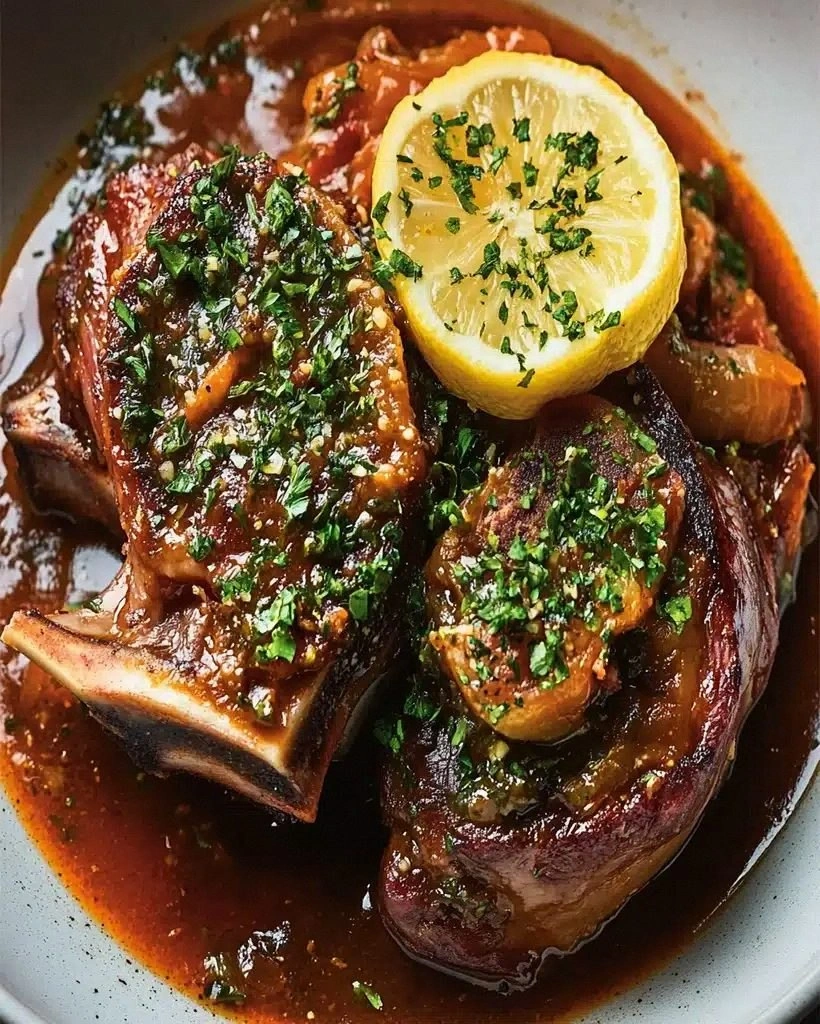
- To serve, place a shank in each shallow bowl and ladle sauce over the top. The meat should be practically falling off the bone, but still holding together. Sprinkle generously with gremolata—the green against the deep red sauce should look like Christmas in Italy. Serve with risotto Milanese or crusty bread to soak up every drop of that incredible sauce. And here's the real test: the marrow should slide out easily with a small spoon. Spread it on bread, mix it into your risotto, or just eat it straight like the luxury ingredient it is.
That's it—you did it. But hold on, I've got a few more tricks that'll take this to another level...
Insider Tricks for Flawless Results
The Temperature Rule Nobody Follows
Here's where most home cooks go wrong: they braise at too high a temperature. The liquid should barely tremble, not bubble like a jacuzzi. You're aiming for 180-190°F internal temperature of the braising liquid. How do you know without a thermometer? Look for lazy bubbles that rise slowly from the bottom of the pot, not a rolling boil. If your sauce is reducing too quickly, your oven is too hot. Every oven lies—yours probably runs 25 degrees hot or cold. Get an oven thermometer and trust it more than your dial settings. A friend tried skipping this step once—let's just say her osso buco turned into shoe leather and her dinner party turned into a pizza delivery emergency.
Why Your Nose Knows Best
Professional chefs taste constantly, but they also smell constantly. The aroma of your osso buco will tell you everything you need to know about timing. When the soffritto is ready, it'll smell sweet and aromatic, not raw or sharp. If the wine hasn't reduced enough, you'll still smell alcohol. When the meat is perfectly cooked, the whole kitchen fills with this rich, meaty, slightly sweet aroma that makes your stomach growl like an angry bear. Trust these signals—they're more reliable than any timer. I'll be honest: I ate half the batch before anyone else got to try it because the smell drove me to madness.
The 5-Minute Rest That Changes Everything
Patience isn't just a virtue—it's the difference between good osso buco and transcendent osso buco. After cooking, the meat is stressed and the sauce is agitated. Five minutes of resting lets the fibers relax, the juices redistribute, and the sauce settle. During this time, skim off the fat that rises to the surface. Your grandmother might have told you fat is flavor, but too much grease mutes the other tastes. Plus, hot fat burns your tongue and prevents you from tasting the subtleties. Use this time to make your gremolata or pour yourself a glass of that white wine you opened.
The Marrow Moment
Don't you dare throw away those bones after serving. The marrow is the whole point of osso buco—it's why Italians fought over who got to suck the bones clean. If your marrow hasn't turned into molten velvet, you undercooked it. It should slide out with a gentle nudge of a small spoon, looking like beige butter. Mix it into your risotto, spread it on grilled bread with a sprinkle of sea salt, or just eat it straight like the culinary rebel you are. That sizzle when it hits the pan? Absolute perfection. Just don't tell your cardiologist I encouraged this behavior.
Creative Twists and Variations
This recipe is a playground. Here are some of my favorite ways to switch things up:
The Spanish Accent
Swap the white wine for dry sherry and add a pinch of smoked paprika to the soffritto. Replace the gremolata with chopped fresh oregano and a splash of sherry vinegar. The smoky paprika plays beautifully with the rich veal, and the sherry adds nutty complexity that regular wine can't match. Serve with crusty bread to soak up the Spanish-Italian fusion sauce.
The Winter Warmer
Add a cinnamon stick and two cloves to the braising liquid, along with a strip of orange peel. The warm spices make this perfect for cold nights, and the orange adds a subtle brightness that cuts through the richness. Remove the whole spices before serving. This version pairs beautifully with creamy polenta instead of risotto.
The French Connection
Replace half the white wine with dry vermouth and add a bouquet garni of thyme, parsley stems, and bay leaf. Finish with a knob of cold butter whisked into the sauce for extra gloss. The vermouth's herbal notes and the French butter technique give this Italian classic a Parisian makeover that'll make you feel like you're dining in a bistro off the Rue Cler.
The Hunter's Style
Add rehydrated porcini mushrooms and their soaking liquid to the braise. The mushrooms add an earthy depth that makes this taste like it was cooked over an open fire in a mountain cabin. Use the soaking liquid instead of water if you need to thin the sauce. Finish with fresh rosemary instead of parsley in your gremolata.
The Summer Lightness
Swap the tomatoes for fresh cherry tomatoes added in the last hour of cooking. Use white wine vinegar instead of lemon in the gremolata, and add fresh basil leaves right before serving. The fresh tomatoes break down into a lighter, brighter sauce that won't weigh you down in hot weather.
The Luxe Upgrade
Add a splash of white truffle oil to the finished sauce and shave fresh white truffles over the top if you're feeling fancy (and wealthy). Or stir in a spoonful of white truffle paste into the gremolata. This turns humble osso buco into a special occasion showstopper that'll have your guests talking for months.
Storing and Bringing It Back to Life
Fridge Storage
Osso buco keeps beautifully in the refrigerator for up to 4 days, but here's the key: store the meat and sauce together in a covered container. The meat will continue to absorb flavors from the sauce, making leftovers even better than the first day. Let it cool completely before refrigerating, and skim off the fat that solidifies on top—though save that fat for cooking eggs or vegetables. When you're ready to reheat, remove it from the fridge 30 minutes before warming to take the chill off. This prevents the meat from seizing up and getting tough.
Freezer Friendly
This dish freezes like a dream for up to 3 months, but do it right. Portion individual servings into freezer bags with the sauce, squeeze out all the air, and lay flat to freeze. This creates thin packets that thaw quickly and don't take up much space. Don't freeze the gremolata—make it fresh when serving. To thaw, transfer to the refrigerator overnight, never use the microwave or you'll end up with stringy meat. The texture won't be quite as perfect as fresh, but the flavors will be there in spades.
Best Reheating Method
Gentle is the name of the game here. Place the osso buco in a covered pan with a splash of water or stock over low heat. You want it to warm slowly, never boil. The microwave is your enemy—it'll turn the meat rubbery and the sauce grainy. If you're reheating from frozen, thaw completely first, then warm gently. Add a tiny splash of water before reheating—it steams back to perfection. And always make fresh gremolata for serving; the bright, fresh flavors are what make leftover osso buco feel special again.