It started with a single, catastrophic misstep: I tried to flambé a sweet potato casserole and ended up with a kitchen that smelled like burnt sugar and a countertop that looked like it had just survived a small fire. I was staring at the charred remains, feeling a mix of embarrassment and disbelief. I laughed, because if you’re going to make a mistake, make it dramatic. But that moment sparked a mission: to turn the humble sweet potato into something that could outshine even the most flamboyant dishes.
Imagine the scene: the oven is preheated to a perfect 375°F, the sweet potato cubes are glistening with a thin sheen of olive oil, and a fragrant blend of cumin, cinnamon, and allspice is dancing in the air. The sound of onions sizzling is a steady, comforting hiss, while the sweet potato’s earthy aroma rises, mingling with the warm spice notes. Your hands feel the heat of the skillet, the gentle vibration of the pot, and the anticipation of a flavor explosion. The taste, once it hits your palate, will be a silky, sweet‑savory balance that lingers like a well‑written novel.
What makes this version stand out is not just the ingredients—it’s the method, the balance, and the subtle twists that elevate it from “good” to “unforgettable.” This isn’t a recipe you find in a generic cookbook; it’s a carefully engineered dish that takes a simple sweet potato and transforms it into a pilaf that feels both comforting and sophisticated. I’ve spent countless evenings experimenting with ratios, timing, and textures until I found the sweet spot that feels like home and adventure rolled into one bite.
But here’s a teaser that will have you wondering: did I add a splash of lemon zest to the rice or a pinch of smoked paprika to the sweet potato? That small, almost invisible tweak is the secret sauce that makes this dish sing. It’s the kind of detail that turns a good meal into a signature experience.
Let me walk you through every single step—by the end, you’ll wonder how you ever made it any other way. I dare you to taste this and not go back for seconds, because once you try it, there’s no going back.
What Makes This Version Stand Out
- Flavor Depth: The combination of cumin, cinnamon, and allspice creates a complex aroma that layers sweet and savory notes, turning each bite into a journey.
- Texture Contrast: The sweet potato cubes remain tender yet slightly firm, while the rice offers a fluffy, almost cloud‑like base, providing a satisfying mouthfeel.
- Ease of Prep: With only eight ingredients and a straightforward cooking method, you can whip up this dish in under an hour, even if you’re a kitchen novice.
- Ingredient Quality: Using fresh, high‑quality sweet potatoes and aromatic spices ensures that every component shines, rather than masking each other.
- Crowd‑Pleaser: This dish is a hit at dinner parties, potlucks, or a cozy family dinner—guests will keep asking for the recipe.
- Make‑Ahead Potential: The flavors deepen when the dish sits overnight, making it perfect for meal prep or a quick, satisfying dinner.
- Versatility: Swap the rice for quinoa or cauliflower rice, or add protein like grilled chicken or tofu, and the dish adapts effortlessly.
Alright, let’s break down exactly what goes into this masterpiece…
Inside the Ingredient List
The Flavor Base
Olive or vegetable oil is the first hero that brings all the flavors together. It creates a glossy coating on the sweet potato cubes, preventing them from sticking and ensuring a caramelized finish. Skipping the oil would result in a dry, under‑cooked texture that fails to capture the dish’s signature caramelization. If you’re looking for a lighter version, swap olive oil for a neutral‑flavored avocado oil, but keep the quantity the same.
The Texture Crew
The 12 ounces of sweet potatoes are the star of the show. When diced into bite‑size cubes, they provide a satisfying bite that contrasts with the soft, fluffy rice. Cutting them too small can cause them to break apart; too large, and they’ll be under‑cooked. Look for sweet potatoes that are firm, with a smooth skin and no blemishes. A quick tip: blanch them for 2 minutes before sautéing to lock in color and reduce cooking time.
The Unexpected Star
Cumin, cinnamon, and allspice might sound like a trio destined for a holiday dish, but they’re the secret agents that give this pilaf its distinctive profile. Cumin adds a warm, nutty depth, while cinnamon introduces a gentle sweetness that pairs beautifully with the potato. Allspice, with its peppery undertones, ties everything together. If you’re allergic to allspice, replace it with a pinch of ground cloves, which offers a similar aromatic profile.
The Final Flourish
Fresh cilantro or parsley and a half piece of lemon are the finishing touches that elevate the dish from great to unforgettable. The herbs bring brightness, while the lemon’s acidity cuts through the richness, leaving a clean, fresh finish. If you prefer a more pronounced citrus kick, zest the lemon and sprinkle it over the finished dish. For a smoky twist, add a dash of smoked paprika to the rice.
Everything’s prepped? Good. Let’s get into the real action…
The Method — Step by Step
- Begin by heating a large skillet or Dutch oven over medium heat. Pour in the two tablespoons of olive or vegetable oil, swirling to coat the surface. The oil should shimmer but not smoke. This is the moment where the base of your flavor profile starts to form.
- Add the finely diced red onion to the hot oil. Sauté for 3–4 minutes until it turns translucent and begins to caramelize, releasing a sweet, nutty aroma that will mingle with the spices later. Stir frequently to prevent sticking.
- Introduce the diced sweet potatoes to the skillet. Toss them with the onions so they’re evenly coated. Let them sear for about 5 minutes, turning occasionally. The surface should develop a light golden crust that locks in flavor.
- Add the cumin, cinnamon, and allspice to the pan. Stir constantly for 30 seconds to toast the spices, releasing their essential oils. You’ll notice a fragrant, almost nutty scent that signals the spices are ready to mingle.
- Pour in one cup of brown long‑grain or basmati rice, stirring to coat the grains with the spiced oil mixture. Then add 2 cups of water or low‑sodium broth, bringing the mixture to a gentle boil. Reduce the heat to low, cover, and let it simmer for 18–20 minutes, or until the rice is tender and the liquid is absorbed.
- Once the rice is cooked, remove the pot from heat and fluff the mixture gently with a fork. This releases steam and keeps the grains separate. At this point, the dish should have a fragrant aroma and a slightly glossy sheen.
- Fold in the chopped cilantro or parsley, allowing the herbs to wilt slightly from the residual heat. Give the dish a final gentle stir, tasting for seasoning. Adjust salt or lemon juice as needed to achieve the perfect balance.
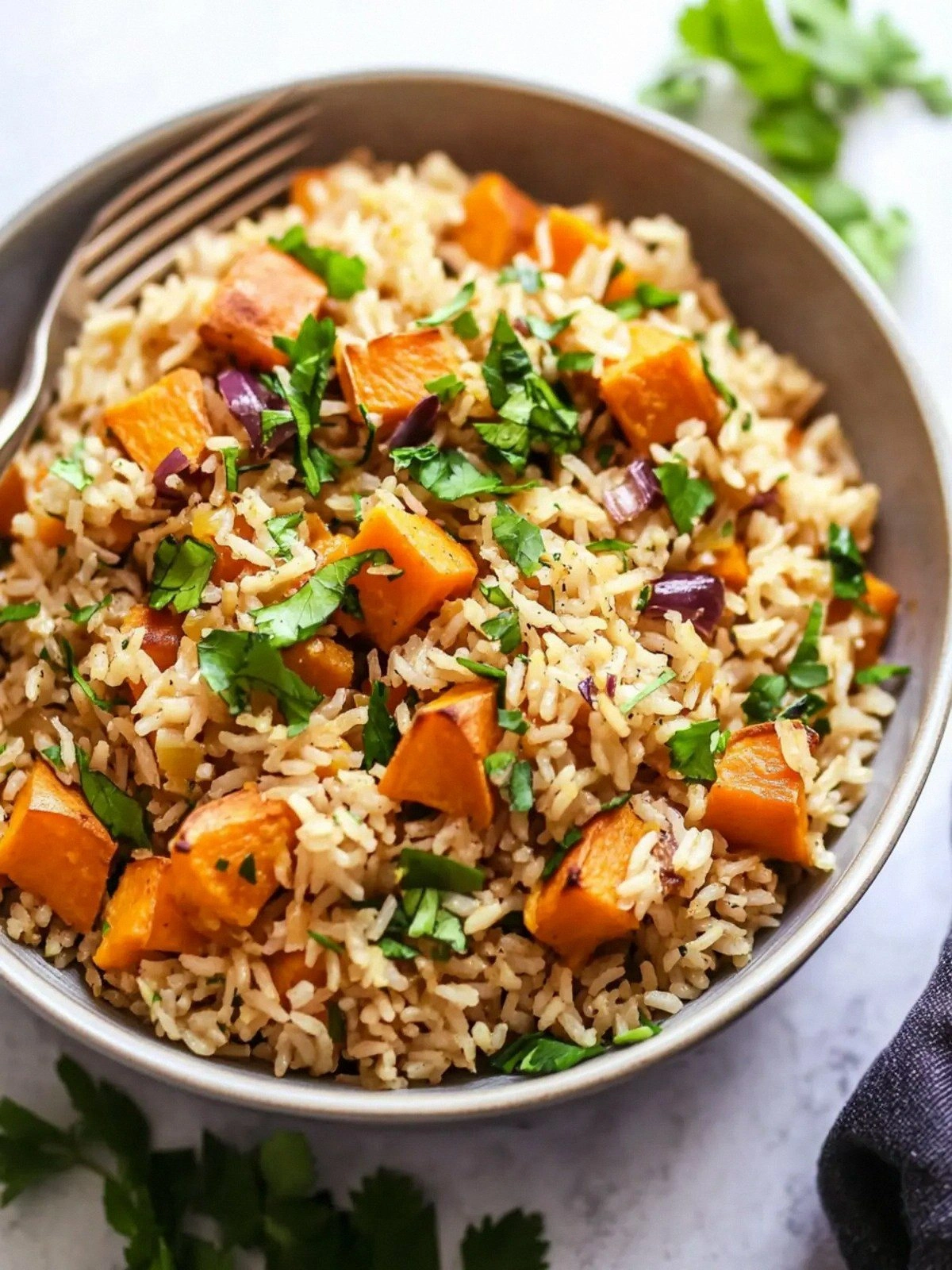
- Serve immediately, garnishing with extra cilantro if desired. The dish should look vibrant, with a golden hue from the caramelized sweet potatoes and a fresh green pop from the herbs.
That’s it — you did it. But hold on, I’ve got a few more tricks that will take this to another level…
Insider Tricks for Flawless Results
The Temperature Rule Nobody Follows
Many cooks start the rice at a high heat, hoping to speed up the process. In reality, a low, steady simmer is essential for even cooking and a fluffy texture. I’ve found that letting the pot reach a gentle boil before reducing the heat to low and covering it locks in moisture and prevents the grains from sticking together. A friend tried this trick once, only to end up with a mushy pilaf that felt more like a soup. Stick to the low simmer and you’ll have perfect rice every time.
Why Your Nose Knows Best
As the sweet potato and rice simmer, you’ll notice a subtle shift in aroma. The scent will transition from earthy to nutty to sweet. Trust your nose; when the smell starts to smell like toasted rice and caramelized onions, that’s the cue to stop stirring and let the flavors meld. This sensory checkpoint ensures you never overcook or under‑season the dish.
The 5‑Minute Rest That Changes Everything
After removing the pot from heat, let the pilaf sit covered for five minutes. This brief resting period allows steam to redistribute, ensuring each grain is evenly cooked and fluffy. Skipping this step often results in a dish that feels unevenly cooked, with pockets of raw sweet potato. Give it that short pause, and you’ll notice a dramatic improvement in texture.
Let the Lemon Do the Heavy Lifting
Half a lemon is a surprisingly powerful ingredient in this recipe. The acidity cuts through the sweetness of the potato and the richness of the rice, creating a balanced flavor profile. If you’re not a fan of lemon, try a splash of lime or a dash of vinegar. The key is to introduce acidity at the right time—right before serving—to brighten the dish.
Mixing in Protein for a One‑Pot Meal
Want to turn this into a complete protein‑rich dish? Add grilled chicken, shrimp, or chickpeas during the last five minutes of cooking. The protein will absorb the flavorful broth and add a satisfying bite. I’ve used this trick at potlucks, and guests rave about the depth of flavor and the convenience of a single‑pot meal.
Creative Twists and Variations
This recipe is a playground. Here are some of my favorite ways to switch things up:
Quinoa & Coconut Twist
Swap the rice for quinoa and add a splash of coconut milk during cooking. The nutty quinoa pairs beautifully with the sweet potato, while the coconut milk gives a creamy, tropical undertone. This version is perfect for a brunch or a light dinner.
Spicy Sriracha Kick
Stir in a tablespoon of Sriracha or your favorite hot sauce during the last minute of simmering. The heat will contrast the natural sweetness of the potatoes, creating a bold, vibrant flavor profile that’s sure to impress.
Smoky Chipotle Variation
Replace the allspice with chipotle powder and add a pinch of smoked paprika. The smoky undertones elevate the dish, making it ideal for a fall or winter dinner where you want that comforting, roasted feel.
Vegetarian Protein Boost
Add a cup of drained, rinsed chickpeas or lentils during the final simmer. This not only boosts the protein content but also adds a hearty texture that makes the dish more filling.
Breakfast‑Style Sweet Potato Hash
Cook the sweet potato cubes until golden brown, then stir in diced bell peppers and a handful of spinach. Finish with a sprinkle of feta cheese and a drizzle of olive oil. Serve over a bed of fluffy rice for a breakfast that’s both sweet and savory.
Storing and Bringing It Back to Life
Fridge Storage
Store the pilaf in an airtight container in the refrigerator for up to 4 days. The flavors will deepen as the dish sits, making it even more delicious the next day. When ready to eat, reheat over low heat, adding a splash of water or broth to loosen the rice.
Freezer Friendly
Cool the dish completely before placing it in a freezer‑safe container. Freeze for up to 2 months. When reheating, add a tablespoon of water or broth to restore moisture, then microwave on high for 2–3 minutes or reheat on the stovetop over low heat.
Best Reheating Method
The secret to a perfectly reheated pilaf is to add a tiny splash of water, cover, and heat over low for 5 minutes. The steam will revive the rice’s fluffy texture, while the sweet potatoes regain their tender bite. Avoid over‑cooking, or the dish will become mushy.